

What Is Conventional vs Synthetic Oil?
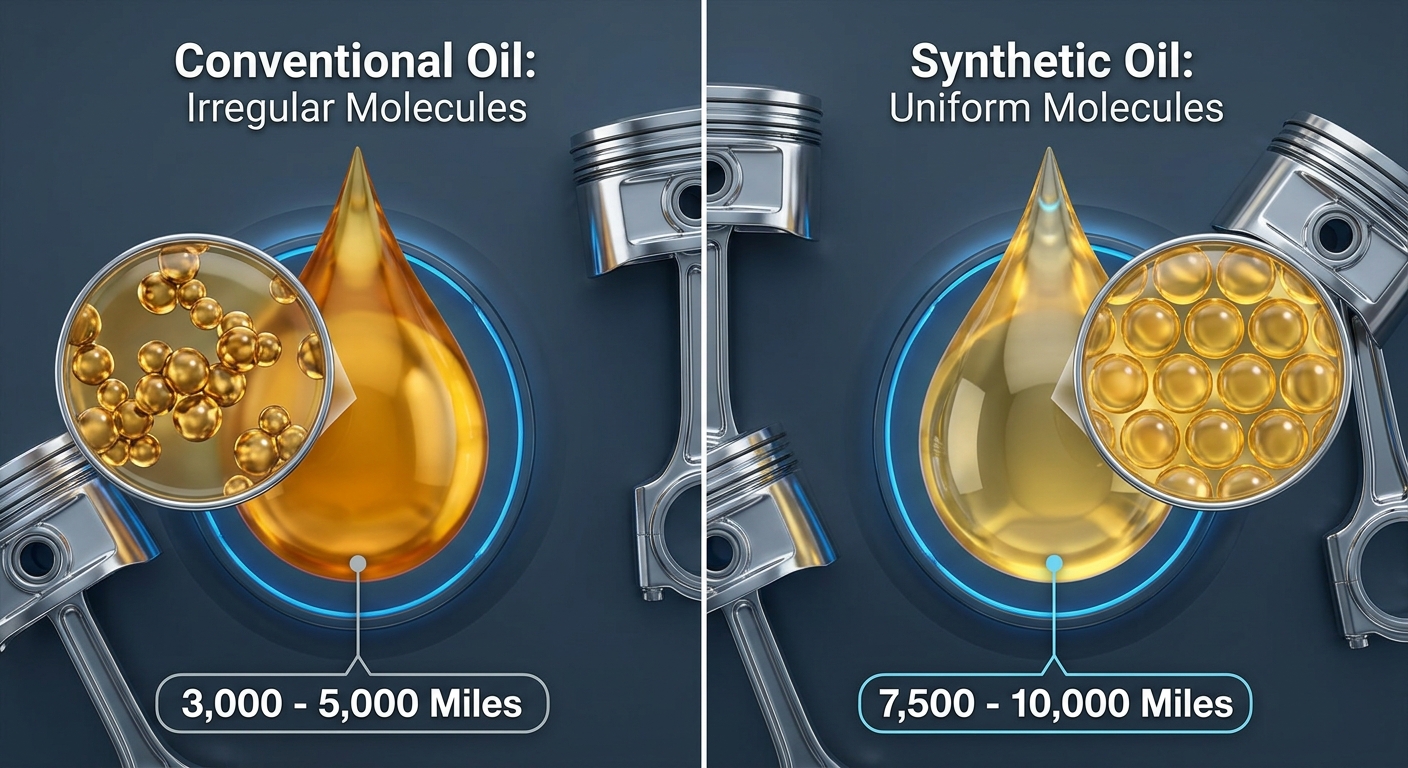
Conventional oil is refined directly from crude petroleum and contains natural molecular irregularities, causing it to break down faster under extreme heat and pressure. Synthetic oil is chemically engineered in a laboratory to create uniform, tailored molecules that deliver superior high-temperature stability, improved low-temperature flow, and resistance to oxidation. Synthetic blend oil combines both base stocks, offering enhanced engine protection over conventional fluids at a moderate cost.
Crude petroleum serves as the raw material for conventional motor oil. During the refining process, lighter and heavier hydrocarbon compounds are separated to construct a functional lubricant base stock. Because conventional oil retains naturally occurring chemical variations, its performance degrades relatively quickly as combustion heat and mechanical shear forces break down its chemical bonds. Vehicles running conventional oil generally require fluid changes every 3,000 to 5,000 miles to maintain safe lubrication levels and avoid severe internal engine wear.
Full synthetic oil undergoes complex chemical synthesis, transforming molecular structures to meet precise performance tolerances. The resulting fluid flows instantly during cold engine startups while maintaining a stable protective film during high-stress operations like trailering or stop-and-go driving. Synthetic oil resists sludge formation, limits evaporation loss at high temperatures, and extends service intervals to 7,500 to 10,000 miles under standard driving conditions. Modern Chevrolet engines, including turbocharged four-cylinders and high-output V8 engines, rely on synthetic formulations certified under the dexos1 specification to uphold factory performance and warranty standards.
When drivers stop by our Russellville location or give our service desk a quick call at (270) 713-3840, choosing between these oils comes down to engine design and driving severe duty. High-mileage synthetic formulations are also engineered specifically for vehicles with over 75,000 miles, incorporating anti-wear agents and seal conditioners that revitalize hardened rubber gaskets to reduce minor leaks.
Table of Contents
- What Are the Primary Technical Functions of Modern Motor Oil?
- How Does Engine Oil Lubricate and Prevent Friction Between Moving Parts?
- How Does Motor Oil Cool, Clean, and Prevent Internal Corrosion?
- What Are Oil Additives and How Does Viscosity Impact Engine Protection?
- Why Is Regular Oil Change Maintenance Critical for Long-Term Engine Health?
- How Often Should You Change Your Engine Oil and Oil Filter?
- Common Questions About Engine Oil and Routine Chevrolet Maintenance
- Keep Your Chevrolet Engine Running Strong
What Are the Primary Technical Functions of Modern Motor Oil?
Modern motor oil serves four critical technical functions inside an internal combustion engine: reducing friction, dissipating internal heat, removing combustion debris, and protecting metal surfaces against chemical corrosion. Without clean oil circulating under pressure, metal-on-metal contact causes severe heat spikes, rapid wear, and potential mechanical failure within minutes of operation.
Friction reduction remains the primary responsibility of any engine lubricant. As internal components move at high speeds, a pressurized film of oil prevents direct contact between spinning journal bearings, pushrods, camshaft lobes, and cylinder walls. Keeping internal friction low reduces parasitic drag on the crankshaft, directly supporting vehicle efficiency and power output across all driving conditions.
Heat management forms another crucial duty performed by engine oil. While the liquid cooling system manages engine block and cylinder head temperatures via coolant jackets, engine oil reaches internal components that coolant cannot access, such as piston skirts, connecting rod bearings, and valve stems. The oil absorbs thermal energy from these extreme heat zones and carries it back down into the oil pan, where atmospheric airflow cools the fluid before the oil pump recirculates it.
Clean engine oil also serves as a sweeping agent that keeps combustion pathways clear. Microscopic carbon particles, unburnt fuel residues, and tiny metallic wear shavings are picked up by the circulating fluid and swept directly into the filtration system. Drivers looking to maintain long-term reliability in our new Chevrolet inventory will find that consistent oil maintenance protects high-precision systems like variable valve timing solenoids from premature clogging.
| Primary Function | Mechanical Target | Operational Benefit |
|---|---|---|
| Friction Reduction | Bearings, pistons, camshafts | Lowers drag and prevents metal contact |
| Thermal Dissipation | Piston skirts, crankshaft | Cools internal components beyond coolant reach |
| Debris Removal | Oil channels, VVT solenoids | Traps carbon and microscopic wear metals |
| Corrosion Control | Cylinder walls, bearings | Neutralizes acidic combustion byproducts |
How Does Engine Oil Lubricate and Prevent Friction Between Moving Parts?
Engine oil prevents friction by creating a continuous, microscopic fluid barrier—known as hydrodynamic lubrication—between moving engine components. When the engine runs, the mechanical action of internal parts sweeps oil into tight tolerances, forcing surfaces to float on a liquid film rather than contacting each other directly.
Inside the combustion chamber, pistons move up and down thousands of times per minute within iron or aluminum cylinder walls. Flexible metal piston rings press outward against the cylinder bore to seal combustion gases. Engine oil coats the cylinder walls, allowing the rings to glide smoothly while maintaining a gas-tight seal. Without this protective barrier, microscopic ridges on the metal surfaces interlock, leading to scoring, excessive heat, and sudden loss of compression.
Camshafts and crankshafts depend on pressurised oil delivery through internal galleries. The oil pump forces lubricant through precision-drilled passages directly into the main and connecting rod bearings. This hydrodynamic pressure lifts heavy rotating shafts off the soft bearing metals, preventing contact even when the engine operates under heavy throttle loads.
For drivers managing daily work demands or agricultural hauling around Elkton, maintaining hydrodynamic oil pressure is vital when working an engine under low-speed, high-load conditions. Vehicle owners sourcing genuine maintenance items through our parts department or maintaining pre-owned trucks from our pre-owned vehicle lineup can rely on factory-grade oils to maintain appropriate film strength across all operating temperatures.
How Does Motor Oil Cool, Clean, and Prevent Internal Corrosion?
Engine oil absorbs localized heat from high-stress internal zones, traps damaging microscopic particles, and neutralizes corrosive combustion acids before they eat away at precision metal surfaces. This triple-action defense ensures that internal components stay clean and dimensionally precise over years of continuous operation.
Internal cooling occurs continuously as oil circulates beneath the pistons and around internal valvetrain assemblies. Combustion chamber temperatures frequently exceed 1,000 degrees Fahrenheit, radiating intense heat into the piston crowns. Oil jets sprayed onto the undersides of the pistons absorb this excessive thermal energy, preventing aluminum pistons from expanding beyond operational clearances or cracking under thermal strain.
[Oil Pump] ---> [Internal Galleries] ---> [Bearings & Piston Jets]
     ^                                                  |
|                                                  v
[Clean Fluid] <--- [Oil Filter Trap] <--- [Oil Pan / Heat Sink]
Cleaning happens through a combination of detergent additives and active fluid flow. As fuel burns inside the cylinders, micro-particles of soot, moisture, and unburnt hydrocarbons blow past the piston rings into the crankcase. Detergents suspended in the oil bind to these particles, preventing them from clumping together into thick, tar-like engine sludge that blocks narrow oil galleries. The oil filter then traps these suspended contaminants as the fluid recirculates.
Corrosion protection relies on specialized chemical inhibitors mixed into the base oil stock. Acidic byproducts form naturally when sulfur compounds in fuel mix with condensed moisture inside a cooling crankcase. Anti-corrosion additives neutralize these harmful acids on contact, leaving a defensive chemical barrier on cylinder walls and copper-alloy bearings. Maintaining these protective chemical properties is a key reason drivers choose certified models from Newton Certified vehicles for long-distance reliability.
What Are Oil Additives and How Does Viscosity Impact Engine Protection?
Oil additives are specialized chemical compounds blended into base oil stocks to enhance thermal resistance, clean internal deposits, and modify fluid flow characteristics. Viscosity measures an engine oil’s resistance to flow at specific operating temperatures, determining how quickly lubricant reaches critical components during cold starts and how thick the protective film remains at operating temperatures.
Modern motor oils utilize multi-grade viscosity ratings designated by standardized SAE numbers, such as 5W-30 or 0W-20. The number preceding the “W” (which stands for Winter) indicates fluid flow characteristics at sub-zero temperatures. A lower winter rating means fluid flows rapidly during cold start-ups, reducing initial start wear when up to 80 percent of lifetime engine wear occurs. The second number reflects the oil’s viscosity at standard engine operating temperatures around 212 degrees Fahrenheit.
Essential additives blended into high-grade motor oils include:
- Detergents: Neutralize acidic combustion deposits and clean internal metal surfaces.
- Dispersants: Keep solid carbon particles suspended in solution so the oil filter can extract them.
- Viscosity Index Improvers: Polymeric chains that expand as oil warms, preventing the fluid from becoming excessively thin at high heat.
- Anti-Wear Agents: Compounds like zinc dialkyldithiophosphate (ZDDP) that form a protective sacrificial layer on high-pressure contact points like camshaft lobes.
- Friction Modifiers: Reduce surface drag to support optimal fuel economy in modern engines.
Choosing the proper viscosity grade specified in your vehicle manual prevents oil starvation and unnecessary engine resistance. Local truck owners evaluating vehicle performance or evaluating your trade-in value should always verify that historical maintenance adhered to manufacturer viscosity recommendations, as incorrect oil weights can throw off hydraulic timing chain tensioners and variable valve timing systems.
Why Is Regular Oil Change Maintenance Critical for Long-Term Engine Health?
Regular oil changes remove accumulated metal particles, dirt, and depleted chemicals before degraded fluid causes permanent mechanical damage. Skipping routine oil service causes chemical breakdown, leading to sludge formation, stuck piston rings, accelerated valvetrain wear, and costly engine repair bills.
Over time, intense internal heat breaks down the molecular bonds in motor oil, causing the fluid to oxidize and thicken. As volatile light molecules evaporate, heavy carbon residues settle in quiet areas of the engine, such as valve covers and oil pans. This dark, jelly-like sludge blocks oil pickup tubes and narrow lubrication passages, starving upper valvetrain components of critical fluid and causing catastrophic camshaft or turbocharger failure.
Degraded oil loses its ability to neutralize acidic compounds, allowing moisture and sulfur byproducts to etch polished metal surfaces. Microscopic metal shavings shedding from worn bearings remain suspended in old oil once the oil filter becomes saturated. Circulating dirty fluid under pressure acts like liquid sandpaper, rapidly wearing down cylinder walls, piston rings, and main crank bearings.
Fresh Oil Service ---> Sustained Hydraulic Pressure ---> Full Protection
        |
        v
Deferred Service  ---> Sludge & Gallery Clogging   ---> Engine Damage
Drivers navigating mixed highway commutes and recreational trailering around Franklin rely on timely maintenance to keep high-stress engine components operating within factory specifications. Routine maintenance preserves internal tolerances, maintains fuel efficiency, and protects overall vehicle trade value. Our technicians stand ready to help you schedule a service appointment or discuss ownership care when you submit a financing application for a new vehicle.
How Often Should You Change Your Engine Oil and Oil Filter?
Service intervals depend heavily on engine design, fluid type, and individual driving habits. While older vehicles required fresh fluid every 3,000 miles, modern Chevrolet powertrains feature advanced engineering and synthetic lubricants that safely extend standard maintenance intervals.
Recommended oil change intervals by fluid category:
- Conventional Oil: Every 3,000 to 5,000 miles or 6 months.
- Synthetic Blend Oil: Every 5,000 to 7,500 miles or 6 to 12 months.
- Full Synthetic Oil: Every 7,500 to 10,000 miles or 12 months.
- Heavy-Duty Diesel Oil: Every 7,500 miles or as indicated by onboard monitoring systems.
Modern Chevrolet vehicles come equipped with an Oil Life Monitoring (OLM) system that calculates remaining fluid life based on real-world operational parameters. Rather than relying solely on odometer distance, the system tracks engine revolutions, ambient air temperatures, idle time, vehicle speeds, and trip lengths. Driving in extreme heat or cold, frequent short trips under 10 miles, heavy towing, or continuous stop-and-go driving accelerates oil breakdown, causing the system to alert the driver earlier.
Always replace the engine oil filter during every oil service. Installing fresh fluid while leaving a clogged or saturated filter in place forces dirty oil through the filter’s internal bypass valve, allowing unfiltered contaminants to flow straight back into critical engine channels.
Common Questions About Engine Oil and Routine Chevrolet Maintenance
Q: Can I switch from conventional oil to full synthetic oil on an older vehicle?
Yes, you can safely switch an older vehicle from conventional to full synthetic motor oil. Modern synthetic lubricants are fully compatible with conventional oil residues and will not damage internal engine seals. In older engines with over 75,000 miles, high-mileage synthetic oil offers superior protection and includes specialized seal conditioners that help prevent small oil leaks from developing around aged rubber gaskets.
Q: What happens if I drive past my recommended oil change interval?
Driving past your recommended oil change interval allows dirty, oxidized oil to break down further, losing its protective viscosity and detergent capabilities. As additives exhaust themselves, harmful engine sludge begins settling in oil passages, while suspended metal particles score cylinder walls and bearings. Continuing to drive on severely degraded fluid leads to increased internal drag, lowered fuel economy, valvetrain noise, and eventual mechanical failure.
Q: Is it necessary to change my oil filter every time I change my oil?
Yes, replacing the oil filter during every oil change is essential for preserving engine health. An old filter contains trapped metallic debris, carbon soot, and saturated filter media that restricts fluid flow. If the filter reaches maximum capacity, an internal bypass valve opens to prevent engine starvation, allowing unfiltered, dirty fluid to circulate directly through your engine bearings and valvetrain.
Q: Why does my synthetic oil turn dark or black on the dipstick?
Dark oil on the dipstick often indicates that the fluid’s detergent additives are working correctly. Detergents sweep up tiny carbon particles and combustion byproducts, keeping them suspended in solution so they can be trapped by the oil filter rather than baking onto engine parts. Color alone does not measure fluid degradation; following your vehicle’s Oil Life Monitoring system or recommended mileage intervals remains the best guide for service timing.
Q: How do driving conditions in our area affect oil life?
Severe driving conditions—including frequent short trips in cold weather, long periods of idling, heavy trailer towing, and driving on dusty rural roads—accelerate oil contamination and thermal breakdown. Under these operating conditions, additives deplete more rapidly, requiring more frequent fluid changes than standard highway driving. Checking your oil level monthly on a flat surface ensures adequate lubrication between scheduled maintenance visits.
Drivers researching pre-owned options through the Newton Certified Pre-Owned program can trust that every vehicle undergoes thorough inspection and fluid updates. You can streamline your maintenance and purchase experience using Newton Fastpass online tools or learn more about our team and our commitment to long-term vehicle health.
Keep Your Chevrolet Engine Running Strong
Consistent oil changes are the single most effective investment you can make to protect your engine’s performance, fuel efficiency, and long-term operating life. Fresh lubricant preserves critical mechanical clearances, prevents destructive sludge build-up, and ensures your vehicle remains reliable mile after mile.
When it is time for routine maintenance or professional engine diagnostics, our certified technicians are here to provide fast, factory-approved care using genuine parts and specifications. Visit our service center to get directions to our service center or give us a call today to reserve your next service appointment.
0 comment(s) so far on What Is Conventional vs Synthetic Oil?