
Understanding the 2023 Chevrolet Tahoe Fuel System and Tank Integrity
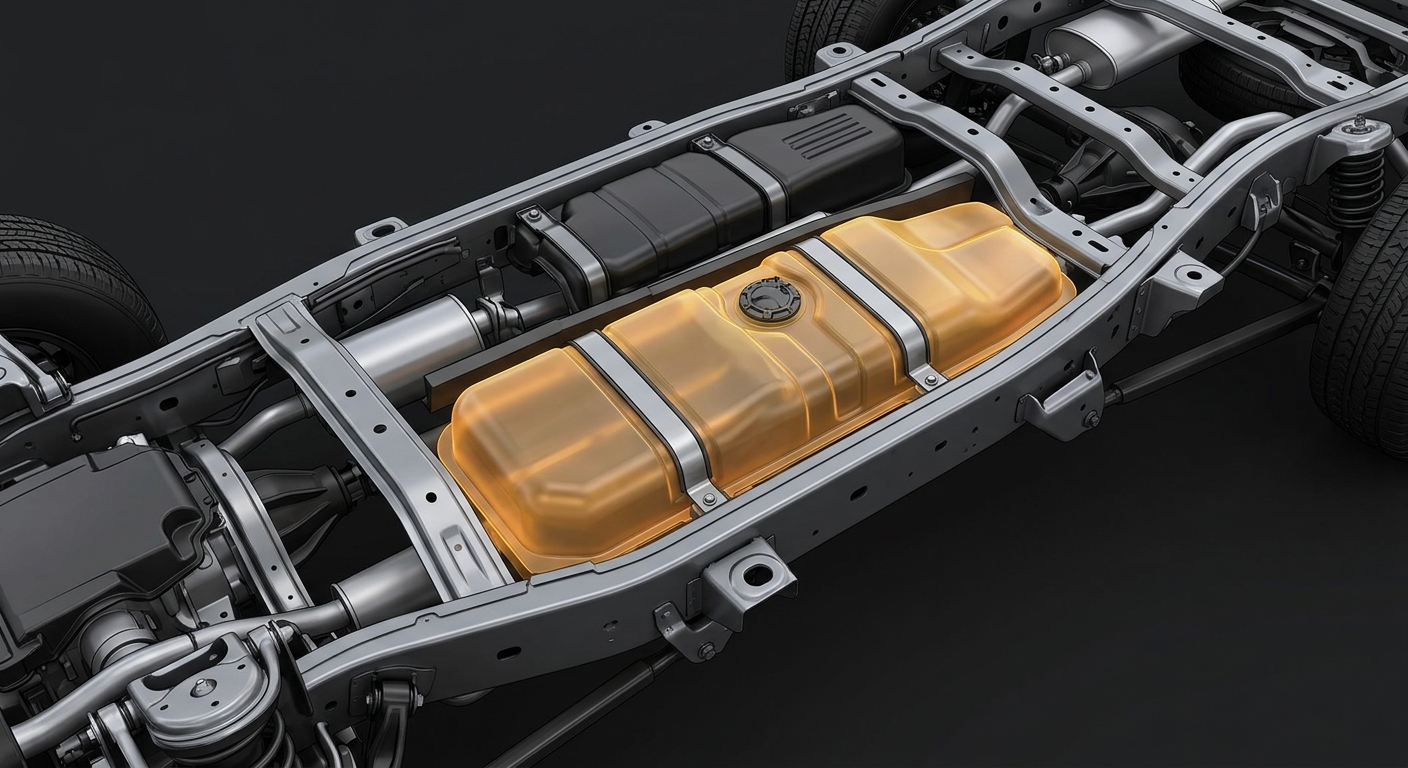
The physical design of a full-size SUV’s fuel system is engineered to balance high capacity with strict safety and emissions regulations. On the 2023 Chevrolet Tahoe, the fuel storage system relies on a molded, high-density polyethylene fuel tank designed to resist corrosion and withstand minor road impacts. This tank is secured underneath the midsection of the vehicle, positioned safely within the frame rails to protect it from external hazards.
The standard fuel capacity for this model is 24 gallons across all primary engine configurations, including the 5.3L V8, the 6.2L V8, and the 3.0L Duramax Turbo-Diesel engine. To keep the tank firmly in place, Chevrolet utilizes two heavy-duty metal support straps that wrap around the tank shell and bolt directly into the vehicle’s frame. These straps are cushioned with isolator strips to prevent metal-on-metal wear and vibration.
For military families stationed at Fort Campbell North who frequently pack up their cargo area for long-distance highway trips, maintaining the physical integrity of this system is essential for uninterrupted travel. If you suspect any damage to your undercarriage or notice fuel odors, our team can help. You can easily find our physical address at 452 Hopkinsville Rd, Russellville, KY 42276 to plan a visit, or you can give us a quick call to speak directly with a service advisor.
Table of Contents
- Are There Any Recalls for the 2023 Chevrolet Tahoe Fuel System?
- Estimated Costs for a 2023 Tahoe Fuel Tank Replacement
- Step-by-Step Technical Guide to Professional Fuel Tank Service
- Choosing Between Genuine GM OEM Parts and Aftermarket Replacements
- Answers to Common Questions About Tahoe Fuel Capacity and Maintenance
- Schedule Professional Chevrolet Care
Are There Any Recalls for the 2023 Chevrolet Tahoe Fuel System?
Safety-conscious drivers often look closely at official manufacturer campaigns and federal databases to ensure their vehicles remain free of defects. When investigating whether there are any recalls related to the fuel system for the 2023 Chevrolet Tahoe, it is important to distinguish between official safety recalls and technical service bulletins. Currently, there are no widespread, active safety recalls issued by the National Highway Traffic Safety Administration specifically targeting the physical construction or structural integrity of the 2023 Tahoe fuel tank.
However, General Motors has issued targeted service bulletins regarding related fuel delivery components. Certain 2023 models were included in a manufacturer communication concerning the fuel pump power control module. A malfunction in this electronic control module can interrupt power to the fuel pump, potentially causing the engine to stall or fail to start. While this is an electronic and fuel delivery issue rather than a physical tank defect, it directly impacts how fuel is pressurized and sent from the tank to the engine.
If a safety recall is officially issued, the manufacturer is legally required to notify registered owners via first-class mail within 60 days of the filing. To check if your specific vehicle has any outstanding campaigns, you can locate your 17-character vehicle identification number on the lower left of your windshield or on your registration card. Entering this number into the official NHTSA recall lookup database will display any unrepaired recalls.
Our service department is fully equipped to handle all authorized warranty and recall repairs at no cost to the vehicle owner. While you are researching vehicle safety and engineering standards, you can also explore other robust vehicle designs in our lineup, such as our new Chevrolet Colorado inventory, the high-performance new Chevrolet Corvette Z06, or the advanced engineering of the new Chevrolet Silverado EV.
Estimated Costs for a 2023 Tahoe Fuel Tank Replacement
Budgeting for major mechanical repairs is a primary concern for long-term SUV owners who want to keep their vehicles in peak operating condition. According to industry cost analyses, such as those published by RepairPal, an OEM fuel tank replacement for a late-model Tahoe typically ranges between about $1,284 and $1,479 when performed at a professional service center. The replacement parts themselves make up the bulk of this expense, generally costing between $964 and $1,010, while professional labor is estimated between $319 and $469.
Labor rates for certified technicians in Kentucky typically fall between $130 and $185 per hour, and a fuel tank replacement is a highly labor-intensive task. Repair shops generally require 3 to 6 hours of dedicated shop time to complete the procedure safely. In addition to the core parts and labor, most professional service centers charge an environmental disposal fee ranging from $30 to $75 to safely drain, handle, and dispose of any old or contaminated fuel remaining in the damaged tank.
Drivers navigating the gravel rural routes or agricultural properties around Springfield often encounter road debris that can occasionally strike the undercarriage, making a physical tank swap necessary. If you need to source specific structural components or heat shields, you can order directly through our dedicated parts department. If you are considering trading in your vehicle instead of undertaking a major out-of-warranty repair, we invite you to value your trade-in online. For those looking at other segments of the Chevrolet lineup, we also carry options ranging from the iconic new Chevrolet Corvette to the track-ready new Chevrolet Corvette ZR1.
Step-by-Step Technical Guide to Professional Fuel Tank Service
Replacing a full-size SUV’s fuel reservoir is a highly structured procedure that requires specialized shop equipment and strict safety adherence. Because gasoline and diesel fuel are highly volatile, technicians must first disconnect the negative battery cable and completely depressurize the fuel system. The vehicle is then raised on a commercial lift, and the rear axle is safely supported using heavy-duty, 3-ton-rated jack stands.
Before the physical tank can be dismounted, the remaining fuel must be completely siphoned out using a specialized, grounded fuel evacuation station. Once the tank is empty, the technician positions a hydraulic transmission jack directly underneath the center of the tank to support its weight. The technician then unbolts the two metal support straps. With the tank supported by the jack, it is slowly lowered a few inches to allow access to the top of the tank shell, where the quick-connect fuel lines, electrical connectors for the fuel sending unit, and evaporative emissions vapor hoses are carefully detached.
After these connections are cleared, the old tank is fully lowered and removed from under the vehicle. The fuel pump module and sending unit are typically transferred to the new tank using a new lock ring and seals. When installing the replacement tank, technicians follow strict OEM procedures:
- Position the new tank on the transmission jack and raise it slowly into the chassis cavity.
- Reconnect all EVAP lines, vent hoses, and electrical harnesses using OEM quick-connect fittings.
- Perform a manual tug test on each line to verify positive latching before securing the tank.
- Reinstall the metal support straps and torque the mounting bolts to factory specifications.
- Reconnect the battery, reinstall the fuel pump relay, and cycle the ignition ON for 5 seconds and OFF for 5 seconds multiple times to prime the fuel lines before starting the engine.
Given the complexity and safety risks involved in handling fuel vapor systems, attempting this repair at home is not recommended. You can easily schedule a service appointment online to have our factory-trained technicians complete this replacement safely. If you are waiting on a service, you can also browse our showroom to see models like the new Chevrolet Equinox or the all-electric new Chevrolet Equinox EV.
Choosing Between Genuine GM OEM Parts and Aftermarket Replacements
Selecting the right replacement components directly impacts the vehicle’s long-term reliability and emissions compliance. Genuine GM OEM fuel tanks are manufactured to the exact dimensional specifications of the original factory tank, ensuring that all mounting brackets, heat shields, and EVAP system connections line up perfectly. Furthermore, OEM parts are backed by a manufacturer warranty, providing peace of mind that aftermarket alternatives rarely match.
While some aftermarket manufacturers offer replacement tanks that claim compatibility, these parts can occasionally suffer from minor dimensional variances. A slight misalignment in a fuel tank neck or an EVAP vent port can lead to persistent check engine lights due to minor evaporative emissions leaks. Additionally, while refurbished or salvaged fuel tanks can save money upfront, they carry a high risk of internal fuel contamination or microscopic stress fractures that could lead to premature failure.
For drivers who depend on their vehicles for daily commutes and family duties, choosing factory-certified parts is the most reliable way to preserve vehicle safety. If you are exploring other highly efficient models in our inventory, we offer a diverse selection including the new Chevrolet Bolt EV, the hardworking new Chevrolet Silverado 1500, and the maximum-capacity new Chevrolet Suburban inventory.
Answers to Common Questions About Tahoe Fuel Capacity and Maintenance
Q: What is the fuel tank capacity of the 2023 Chevrolet Tahoe?
The 2023 model is equipped with a standard 24-gallon fuel tank across all engine options, including the V8 gasoline engines and the turbo-diesel option. This capacity is optimized to provide a strong driving range without taking up excessive under-vehicle space.
Q: Does the 2023 Chevrolet Suburban have a larger fuel tank than the Tahoe?
Yes, the larger wheelbase of the Suburban allows it to package a larger 28-gallon fuel tank. This larger capacity helps accommodate the Suburban’s heavier curb weight and provides extended highway driving ranges.
Q: What is the maximum highway driving range of the 2023 Tahoe Diesel on a single tank?
When equipped with the 3.0L Duramax Turbo-Diesel engine, which achieves an EPA-estimated 28 mpg highway, the Tahoe can achieve a maximum highway range of approximately 672 miles on its standard 24-gallon tank. Real-world range will vary based on driving habits, cargo load, and terrain.
Q: How much fuel remains in the tank when the low fuel warning light comes on?
The low fuel warning indicator is programmed to illuminate when there are approximately 2 to 3 gallons of fuel remaining in the tank. Driving consistently with low fuel levels is not recommended, as the fuel pump relies on being submerged in fuel to stay cool and lubricated.
Q: Does the GM powertrain warranty cover a cracked or leaking fuel tank?
The standard 5-year/60,000-mile powertrain warranty covers defects in materials or workmanship for internal powertrain components, but it does not cover physical damage to the fuel tank caused by road hazards or off-road impacts. Physical damage is typically addressed through personal auto insurance policies.
To make your next vehicle purchase or service experience as seamless as possible, you can utilize our Newton Fastpass program to complete major steps online. You can also explore our certified pre-owned vehicles to learn about the strict inspection standards and certified pre-owned benefits we offer. To see how we prioritize our customers, feel free to learn more about us and our commitment to the local community.
Schedule Professional Chevrolet Care
Maintaining the structural integrity of your SUV’s fuel delivery system is vital for safety, efficiency, and overall performance. Whether you need a comprehensive diagnostic check, a routine multi-point inspection, or a complete fuel tank replacement, our factory-trained technicians are ready to assist. We use state-of-the-art diagnostic equipment and genuine GM parts to ensure your vehicle is repaired to original factory standards.
If your vehicle experiences an unexpected fuel system issue or breakdown on the road, remember that Chevrolet vehicles come with manufacturer-backed roadside assistance. This program offers brand-specific expertise, towing to authorized service centers, and complete warranty protection. You can reach the dispatch team directly at Chevrolet Roadside Assistance: 1-800-243-8872 for immediate towing and support coordination.
We invite you to visit our Russellville showroom to discuss your service needs or explore our latest vehicles. If you prefer to speak with our staff directly to book an appointment, please call us at (270) 713-3840. Beyond our full-size SUVs, we can also introduce you to innovative performance models like the new Chevrolet Corvette E-Ray. When you are ready to move forward with a purchase, you can easily apply for financing online or browse our complete new Chevrolet Tahoe inventory to find your next family vehicle.
0 comment(s) so far on Understanding the 2023 Chevrolet Tahoe Fuel System and Tank Integrity