
The Vital Role of Clean Air in Your Chevrolet Engine
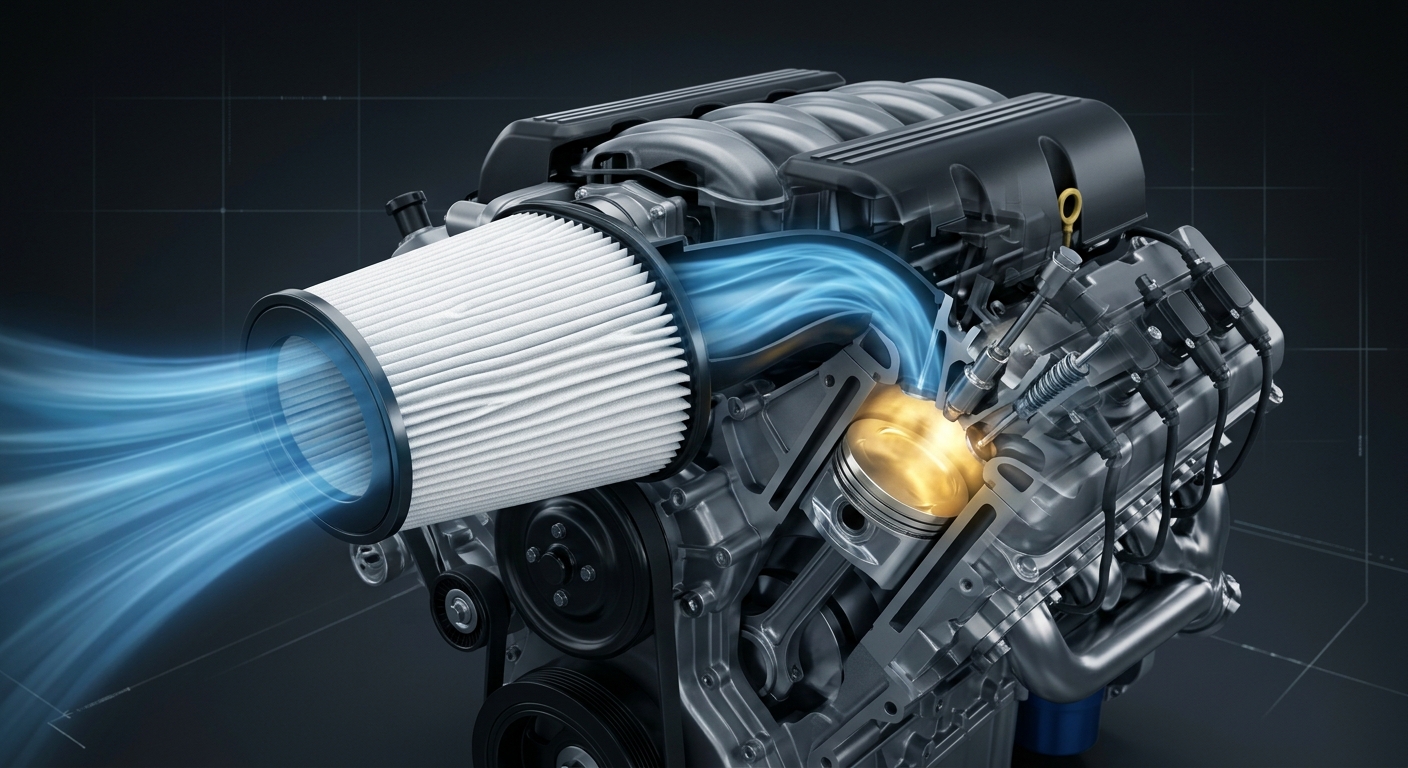
An internal combustion engine requires a massive volume of clean air to perform efficiently. For every single gallon of fuel your vehicle burns, the engine consumes approximately 10,000 gallons of air. This intake of air mixes directly with fuel in the combustion chamber, creating the controlled explosions that drive your pistons and power your vehicle down the highway. Because the engine requires such a high volume of air, any restriction or contamination in the intake system can quickly degrade performance and fuel economy.
The primary function of an engine air filter is to prevent environmental contaminants such as dust, dirt, pollen, sand, debris, and insects from entering the engine’s combustion chamber [3]. By trapping these foreign particles, the filter protects highly sensitive internal components, including the pistons, cylinder walls, and valves, from abrasive wear [3]. If even a single particle as small as a grain of salt bypasses the filter, it can act like sandpaper inside the cylinders, scratching the polished walls and compromising the tight seal required for proper engine compression. Over time, this microscopic scratching leads to premature engine wear, increased oil consumption, and highly expensive internal engine repairs.
Maintaining a clean barrier is the simplest way to preserve the longevity of your powertrain. If you want to drop by to speak with our certified technicians about your vehicle’s maintenance needs, you can easily find our dealership location on Hopkinsville Road. Alternatively, if you have questions about a sudden change in your vehicle’s performance or want to verify if your filter needs immediate attention, feel free to give our service team a quick call to discuss the symptoms you are noticing.
Table of Contents
- What is the Risk of a DIY Filter Change on Modern Chevrolet Models?
- How Dust and Rural Driving Impact Your Service Interval
- Recognizing the Warning Signs of a Clogged Engine Air Filter
- Comparing OEM Chevrolet Filters vs Aftermarket Alternatives
- Common Questions About Chevrolet Engine Air Filter Maintenance
- Protect Your Engine Performance at Newton Chevrolet
What is the Risk of a DIY Filter Change on Modern Chevrolet Models?
Many drivers view swapping an engine air filter as a quick weekend project, but modern engine bays are far more complex than those of older vehicles. Attempting a do-it-yourself filter replacement carries several distinct technical risks that can lead to immediate drivability issues, warning lights, or even severe engine damage. The most common pitfall of a DIY change is failing to seal the filter housing properly or accidentally damaging nearby sensors.
The air filter box cover is directly attached to the engine intake tube, which houses critical electronic sensors like the Mass Airflow Sensor (MAF) and the intake air temperature sensor. When you open the airbox to access the filter, you must move or manipulate this intake tube. If you pull too hard, twist the assembly, or fail to disconnect the wiring harnesses gently, you can easily damage the delicate hot-wire element inside the MAF sensor or tear the rubber intake boot. A damaged MAF sensor cannot accurately measure incoming air, which leads to an incorrect air-fuel mixture, rough idling, sluggish acceleration, and an illuminated check engine light.
Furthermore, getting the filter element to sit perfectly flush within the housing can be surprisingly difficult in modern crowded engine bays. If the filter cartridge is slightly misaligned, or if the plastic clips and screws securing the airbox lid are not tightened evenly, a gap will remain. This gap allows unfiltered air to bypass the filter entirely—a condition known as engine dusting. Dust, grit, and road debris will be sucked directly into the engine, causing rapid, irreversible abrasive wear to the cylinder walls and piston rings. There are also delicate vacuum lines routed around the airbox that are easily bumped loose during a DIY swap, creating vacuum leaks that cause the engine to run lean and stall.
For drivers who prefer the peace of mind that comes with professional, factory-trained care, our service department is fully equipped to handle all maintenance on the latest models. Whether you are driving a durable truck or a family-friendly crossover, you can explore our complete selection of new models to see how modern engineering organizes these advanced under-hood systems. If you are shopping for a hard-working truck, you might want to look at our new Silverado 1500 inventory or check out the capabilities of our heavy-duty Silverado 2500 models. For those who need maximum towing capacity and utility, we also carry our heavy-duty Silverado HD models.
If a midsize truck is better suited to your garage, you can view our current Colorado inventory. Families looking for spacious three-row capability can browse our new Suburban models, look through our current Tahoe selection, or check out the redesigned our new Traverse inventory. We also accommodate drivers seeking efficient, compact options; you can view our lineup of new Trax models, check out our versatile Trailblazer inventory, or explore our popular Equinox models.
For those looking to transition to electric power, we feature our new Equinox EV models, our advanced Blazer EV selection, and our groundbreaking Silverado EV trucks. We even support legacy electric vehicle shoppers looking to browse our Bolt EV options or our Bolt EUV inventory. Finally, performance enthusiasts can look at our iconic Corvette inventory, including the hybrid our Corvette E-Ray models, the track-focused our high-performance Corvette Z06, and the ultimate supercharged our Corvette ZR1 inventory. If you want to compare these advanced engine and motor layouts in person, you can explore our entire showroom online before visiting.
How Dust and Rural Driving Impact Your Service Interval
While manufacturers provide standard maintenance schedules, your actual driving environment plays a massive role in how quickly your engine air filter becomes clogged. For passenger cars operating under normal highway and suburban driving conditions, manufacturers typically recommend replacing the engine air filter every 12,000 to 25,000 miles or annually [3]. A common general rule of thumb is replacement every 15,000 to 30,000 miles or every 2 years [4]. However, these intervals assume clean, paved roads and moderate climates.
For drivers navigating the agricultural areas and unpaved county roads around Elkton, the standard replacement intervals do not apply. Operating a vehicle in dusty environments, on gravel roads, or during heavy harvesting seasons exposes the intake system to a constant barrage of airborne soil and crop particulate. Under these harsh, high-debris conditions, engine air filters should be visually inspected about every 6,000 miles and replaced as needed, rather than waiting for the standard interval [2]. In extremely severe agricultural or construction environments, filter service life can be cut down to a fraction of its normal rating, sometimes requiring replacement in as little as 50 to 200 service hours to prevent severe restriction [5][8].
Neglecting a dirty filter in dusty conditions directly starves the engine of the oxygen it needs to breathe. If you suspect your vehicle is overdue for an inspection, you can quickly schedule a service appointment online to have our technicians check it. If you are driving an older vehicle that has faced years of demanding rural service, it might be time to upgrade; you can browse our quality pre-owned inventory or use our online tool to estimate your current vehicle’s trade-in value toward a newer model.
Recognizing the Warning Signs of a Clogged Engine Air Filter
A restricted engine air filter does not fail silently. As dirt, soot, and road debris build up within the paper pleats, the physical openings that allow air to pass through begin to block. When the filter becomes heavily restricted, your Chevrolet will exhibit several clear performance and physical symptoms that indicate a replacement is necessary.
The most common warning signs of a clogged engine air filter include:
- Reduced Engine Power and Acceleration: You will notice a sluggish throttle response when merging onto the highway or climbing hills [3][8].
- Decreased Fuel Economy: On older carbureted vehicles, a clogged filter dramatically drops fuel efficiency. While modern engine computers adjust fuel delivery to match restricted airflow, the engine still has to work much harder to pull in air, which can still hurt overall efficiency over time [3].
- Unusual Engine Sounds: You may hear coughing, spitting, or sucking sounds from the engine bay as the motor struggles to draw in air [3].
- Illuminated Check Engine Light: If the airflow restriction is severe enough, the engine computer will detect a lean or rich condition and trigger a diagnostic trouble code [8].
- Dark Smoke or Fuel Smell: Unburned fuel exiting the exhaust can sometimes cause a noticeable gasoline odor or dark smoke.
If your vehicle is exhibiting these symptoms, ignoring them can lead to fouled spark plugs or damaged catalytic converters. If you are looking to replace a vehicle that has seen better days, we invite you to browse our budget-friendly pre-owned vehicles under 30K. To streamline your buying process, you can submit a secure credit application online before you visit. We pride ourselves on transparent, high-quality service, and we encourage you to read our online customer reviews to see how we take care of our guests.
Comparing OEM Chevrolet Filters vs Aftermarket Alternatives
When it is time to replace your filter, choosing the right part is critical to maintaining your vehicle’s warranty and performance. Original Equipment Manufacturer (OEM) parts are designed by Chevrolet specifically for your vehicle’s exact engine displacement and airbox dimensions. They feature high-quality paper media with precise pleat counts to maximize surface area, ensuring they capture microscopic contaminants without restricting airflow.
Aftermarket filters, while sometimes slightly cheaper, are often built to fit a wide variety of makes and models, meaning they may not seal perfectly in your Chevrolet airbox. A fraction of an inch of play around the rubber gasket can allow dirty air to slip past the filter. Some aftermarket options are marketed as “high-flow” or reusable performance filters that use oiled cotton gauze. While these can last longer, if they are over-oiled during DIY cleaning, the excess oil can pull off the filter media and coat the Mass Airflow Sensor, causing immediate sensor failure and costly electronic repairs.
To ensure your engine receives the exact filtration level it was engineered to use, you can order genuine OEM parts from our parts department. If you are looking for a rugged, dependable truck that comes factory-equipped with heavy-duty filtration, you can shop our selection of pre-owned trucks. For more information about our dealer philosophy, parts availability, and full capabilities, feel free to visit our homepage to explore everything we offer.
Common Questions About Chevrolet Engine Air Filter Maintenance
Q: What is the risk of a DIY filter change?
A: The primary risks include tearing the intake boot, damaging the delicate Mass Airflow Sensor wiring, or failing to seal the airbox lid properly. A poor seal allows unfiltered road dust to bypass the filter and enter the combustion chamber, causing severe abrasive wear on your cylinder walls.
Q: How can I visually tell if my engine air filter needs to be replaced?
A: A clean, functional filter element is typically white or light-colored, whereas a dirty filter will appear grey, black, or heavily coated in debris [3][9]. You can perform a quick visual test by holding the filter up to a bright light; if the light cannot easily pass through the paper pleats, the filter is clogged and needs replacement.
Q: Will a clean air filter improve my vehicle’s acceleration?
A: Yes, replacing a severely clogged air filter can restore lost acceleration by 6% to 11% on modern fuel-injected vehicles. Restoring proper, unrestricted airflow allows the engine computer to optimize the air-fuel mixture for maximum combustion efficiency.
Q: Do I need to change my air filter more often if I drive on gravel roads?
A: Yes, driving on unpaved or dusty roads requires much more frequent filter inspections. While highway drivers can go up to 25,000 miles, drivers in dusty rural areas should inspect their filters every 6,000 miles or during every routine oil change to prevent premature clogging [2][3].
Q: What is the average cost to have an engine air filter replaced professionally?
A: On average, a professional air filter replacement costs between $77 and $97. This typically includes $38 to $55 for expert labor and $39 to $42 for the high-quality replacement part, ensuring a perfect seal and preventing damage to surrounding sensors.
To make your vehicle ownership experience as seamless as possible, you can learn about our Newton Fastpass program for online buying. We also offer certified pre-owned vehicles that undergo rigorous multi-point inspections; you can read about our certified pre-owned program benefits or learn more about our dealership’s history of serving the community.
Protect Your Engine Performance at Newton Chevrolet
A simple engine air filter is your powertrain’s first line of defense against the elements. For drivers navigating the daily highway commutes or agricultural routes around Franklin, keeping this filter clean is essential to preserving fuel economy, acceleration, and engine longevity. Trying to save a few dollars with a DIY replacement can lead to expensive sensor damage, vacuum leaks, or engine dusting if the housing is not sealed perfectly.
Our factory-trained technicians have the specialized tools and experience to inspect, clean, and replace your filter quickly and correctly using genuine OEM parts. If you are ready to bring your vehicle in for a multi-point inspection or routine service, we welcome you to get directions to our Russellville showroom. If you prefer to discuss your vehicle’s specific maintenance schedule or symptoms over the phone, please give us a call to speak directly with our service advisors. For those looking to upgrade to a vehicle with modern safety and efficiency features, we invite you to browse our pre-owned SUV inventory to find the perfect fit for your lifestyle.
0 comment(s) so far on The Vital Role of Clean Air in Your Chevrolet Engine