

Can You Ask a Dealership to Test Tow With One of Their Trailers?
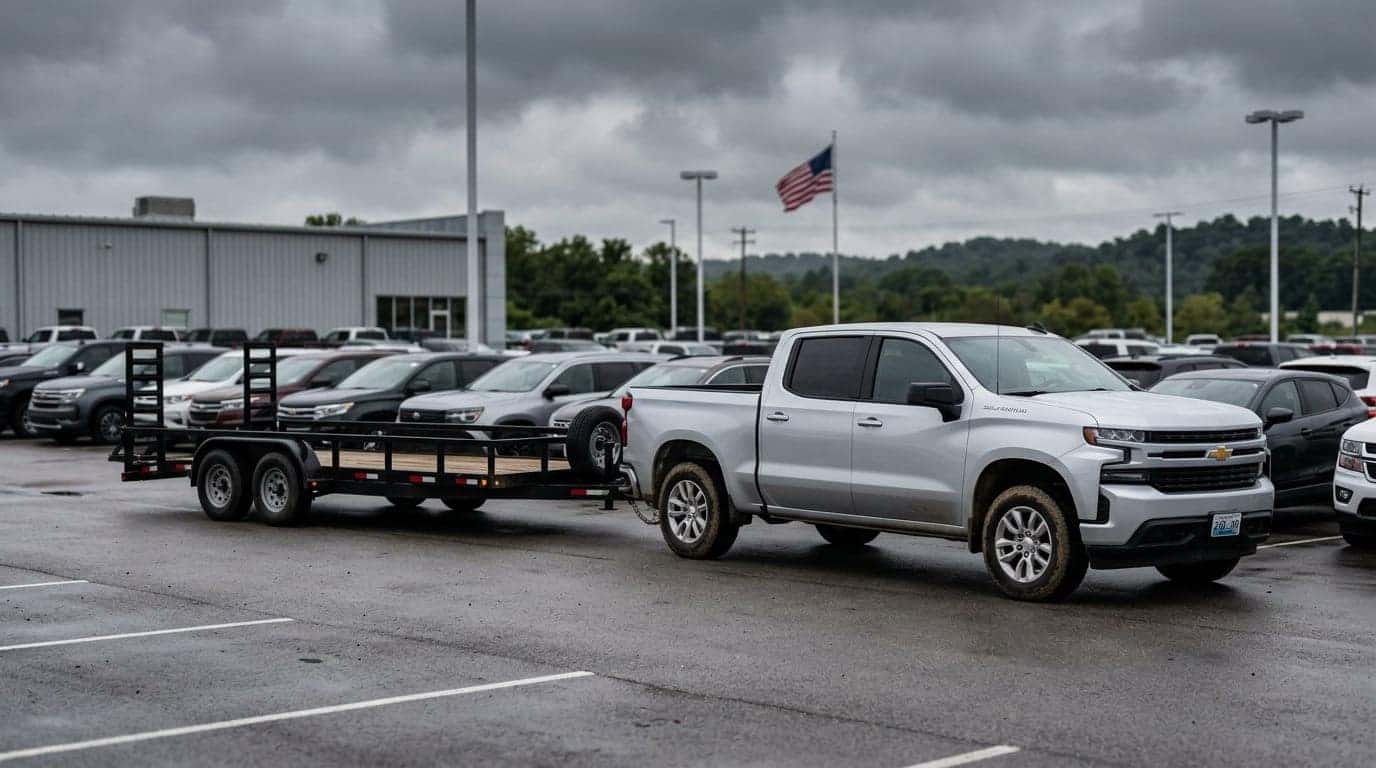
Yes, buyers can request a test tow with a dealer-owned trailer or inventory utility trailer, provided the test vehicle features proper factory trailering equipment and a compatible receiver. Dealerships routinely approve a tow test drive once the driver presents a valid driver’s license, verifies active auto insurance coverage, and signs a temporary vehicle loaner agreement prior to hitching the rig.
Evaluating a truck or SUV under actual load provides critical insights that a standard road test cannot reveal. When hauling weight, a vehicle exposes its true throttle response, transmission shift mapping, suspension geometry, and braking performance. Evaluating a candidate tow vehicle with a trailer attached helps confirm that the engine and chassis match your specific trailering demands before committing to a purchase.
Our team at Newton Chevrolet of Russellville accommodates prospective truck and SUV buyers who want to evaluate real-world trailering dynamics. To prepare for a hitch demonstration, we recommend contacting our staff in advance so we can verify that the test truck features the correct factory trailering package, matching hitch receiver size, and active 7-pin electrical harness. Before taking a vehicle onto local roads, our team verifies that the trailer coupler, safety chains, and breakaway switch are properly configured.
To schedule a dedicated trailering demonstration or confirm vehicle availability, give our team (270) 713-3840 a call or visit our Russellville dealership showroom to review equipped trucks on our lot.
Table of Contents
- What Should You Verify With the Dealer Before Testing a Tow Vehicle?
- What Is Payload Capacity Versus Towing Capacity When Evaluating a Test Tow?
- How Do You Test Tow a Vehicle and Adjust Trailer Brake Gain Settings?
- Is a Heavy-Duty Engine Oil Cooler Necessary for Towing?
- Common Questions About Dealer Tow Test Drives
- Test Tow Your Next Chevrolet at Newton Chevrolet of Russellville
What Should You Verify With the Dealer Before Testing a Tow Vehicle?
Prior to setting out on a tow test drive, drivers must verify the trailer’s loaded weight, tongue weight, hitch ball size, wiring harness configuration, and official vehicle certification labels. Matching these physical ratings ensures the vehicle operates within its legal gross combination weight limits while protecting both the driver and the equipment during the demonstration.
Before connecting a trailer to any test vehicle, compare the physical specification labels on the driver’s door jamb against the trailer’s data plate. The key figures to verify include:
- Gross Vehicle Weight Rating (GVWR): The maximum allowable total weight of the tow vehicle when fully loaded with passengers, cargo, and trailer tongue weight.
- Gross Combined Weight Rating (GCWR): The total maximum allowable weight of the tow vehicle, trailer, cargo, equipment, and occupants combined.
- Hitch Receiver Class: Confirm whether the installed receiver is a Class III or Class IV hitch, ensuring its tongue weight and gross trailer weight limits exceed your test load.
- Wiring Connections: Ensure the vehicle includes a factory 7-pin round wiring connector for electric trailer brake signal transmission, rather than a basic 4-pin flat connector designed only for basic lighting.
Paperwork verification is equally essential before hitching up. Most dealerships require a brief verification process including a copy of your driver’s license, current primary auto insurance card, and a signed test-drive liability waiver covering both the vehicle and towed unit.
When reviewing our new vehicle inventory, you can verify which models include factory-installed trailering equipment, integrated trailer brake controllers, and heavy-duty cooling packages right from the factory window sticker. If you plan to supply your own drop hitch or ball mount for the test drive, our parts department can confirm compatible ball sizes and weight-distribution shank ratings before you hit the road.
What Is Payload Capacity Versus Towing Capacity When Evaluating a Test Tow?
Towing capacity is the maximum total weight a vehicle can pull behind its rear bumper, whereas payload capacity is the maximum weight the vehicle’s frame and axles can support directly inside the cabin, cargo bed, and on the hitch receiver. When evaluating a rig on a test drive, payload capacity is almost always the rating that reaches its limit first.
A common mistake when evaluating trucks involves focusing entirely on the maximum advertised tow rating while ignoring payload consumption. Every pound added to the vehicle—including driver weight, passenger load, bed cargo, fuel, and the downward force exerted by the trailer coupler—directly reduces the remaining payload allowance.
+-------------------------------------------------------------------+
|                     GROSS COMBINED WEIGHT (GCWR)                  |
+------------------------------------+------------------------------+
|        TOW VEHICLE WEIGHT          |        TRAILER WEIGHT        |
+------------------+-----------------+---------------+--------------+
|   Curb Weight    | Payload Margin  | Cargo & Gear  | Empty Frame  |
|  (Vehicle Frame) | (People, Cargo, |               |              |
|                  |  Tongue Weight) |               |              |
+------------------+-----------------+---------------+--------------+
Tongue weight represents the static downward force that the trailer tongue exerts onto the hitch ball. For conventional bumper-pull trailers, ideal tongue weight ranges between 10% to 15% of the total loaded trailer weight. On a 7,000-pound loaded travel trailer, the tongue weight places between 700 pounds and 1,050 pounds of direct load onto the truck’s rear suspension. That force counts directly against your available payload capacity.
Total Loaded Trailer Weight: 7,000 lbs
├── Required Tongue Weight (10% - 15%): 700 lbs to 1,050 lbs
└── Consumes 700 lbs - 1,050 lbs of Available Vehicle Payload Capacity
If tongue weight consumes too much payload, the rear suspension squats, causing the front tires to lose ground contact pressure. This transfer of mass lightens steering feedback, misaligns headlight beams, and increases stopping distance. Conversely, insufficient tongue weight—under 10%—causes aerodynamic instability and severe trailer sway at highway speeds.
For local drivers in Elkton hauling agricultural equipment, livestock trailers, or heavy utility loads across rural back roads, keeping payload and tongue weight balanced prevents rear axle overload on uneven terrain.
Selecting the proper powertrain configuration ensures your truck delivers sufficient output to handle high payload and tongue weight demands. For example, the 2026 Chevrolet Silverado 1500 offers diverse engine options, including the 2.7L TurboMax engine producing 310 hp and 430 lb-ft of torque, and the 5.3L EcoTec3 V8 generating 355 hp and 383 lb-ft of torque through a smooth Hydra-Matic automatic transmission. Properly equipped configurations achieve maximum tow ratings up to 13,300 pounds, providing substantial structural overhead for heavy trailering.
Exploring our pre-owned vehicle selection pre-owned vehicle inventory allows buyers to evaluate a variety of cab configurations, axle ratios, and bed lengths to discover the exact balance of payload and trailering performance required for their workload.
Dimensions & Capacity
Capacity and dimensions by trim
| Feature | Custom 4X4 Crew Cab Short Box | Custom 4X4 Crew Cab Standard Box | Custom 4X4 Double Cab Std Box | Custom Crew Cab Short Box |
|---|---|---|---|---|
| Seating | 6 | 6 | 6 | 6 |
| Curb weight | 4,950 lbs | 5,010 lbs | 4,150 lbs | 4,700 lbs |
| Towing | 9,000 lbs | 9,000 lbs | 9,000 lbs | 9,200 lbs |
| Payload | 2,050 lbs | 1,990 lbs | 2,850 lbs | 2,100 lbs |
Dimensions & Capacity (continued)
| Feature | Custom Double Cab Std Box | Custom Trail Boss 4X4 Crew Cab Short Box | Custom Trail Boss 4X4 Crew Cab Std Box | High Country 4X4 Crew Cab Short Box |
|---|---|---|---|---|
| Seating | 6 | 6 | 6 | 5 |
| Curb weight | 4,150 lbs | 5,010 lbs | 5,070 lbs | 5,080 lbs |
| Towing | 9,200 lbs | 9,000 lbs | 9,000 lbs | 9,300 lbs |
| Payload | 2,650 lbs | 1,990 lbs | 1,930 lbs | 1,920 lbs |
Dimensions & Capacity (continued)
| Feature | High Country 4X4 Crew Cab Standard Box | High Country Crew Cab Short Box | LT 2FL 4X4 Crew Cab Short Box | LT 2FL 4X4 Double Cab Std Box |
|---|---|---|---|---|
| Seating | 5 | 5 | 6 | 6 |
| Curb weight | 5,130 lbs | 4,860 lbs | 4,950 lbs | 4,940 lbs |
| Towing | 9,300 lbs | 9,500 lbs | 9,000 lbs | 9,000 lbs |
| Payload | 1,870 lbs | 1,940 lbs | 2,050 lbs | 2,060 lbs |
Dimensions & Capacity (continued)
| Feature | LT 4X4 Crew Cab Short Box | LT 4X4 Crew Cab Standard Box | LT 4X4 Double Cab Std Box | LT Crew Cab Short Box |
|---|---|---|---|---|
| Seating | 6 | 6 | 6 | 6 |
| Curb weight | 4,950 lbs | 5,010 lbs | 4,940 lbs | 4,700 lbs |
| Towing | 9,000 lbs | 9,000 lbs | 9,000 lbs | 9,200 lbs |
| Payload | 2,050 lbs | 1,990 lbs | 2,060 lbs | 2,100 lbs |
Dimensions & Capacity (continued)
| Feature | LT Crew Cab Standard Box | LT Double Cab Std Box | LT Trail Boss 4X4 Crew Cab Short Box | LT Trail Boss 4X4 Crew Cab Standard Box |
|---|---|---|---|---|
| Seating | 6 | 6 | 6 | 6 |
| Curb weight | 4,810 lbs | 4,660 lbs | 5,010 lbs | 5,070 lbs |
| Towing | 9,200 lbs | 9,200 lbs | 9,000 lbs | 9,000 lbs |
| Payload | 1,990 lbs | 2,140 lbs | 1,990 lbs | 1,930 lbs |
Dimensions & Capacity (continued)
| Feature | LTZ 4X4 Crew Cab Short Box | LTZ 4X4 Crew Cab Standard Box | LTZ Crew Cab Short Box | RST 4X4 Crew Cab Short Box |
|---|---|---|---|---|
| Seating | 5 | 5 | 5 | 6 |
| Curb weight | 5,080 lbs | 5,130 lbs | 4,860 lbs | 4,950 lbs |
| Towing | 9,300 lbs | 9,300 lbs | 9,500 lbs | 9,000 lbs |
| Payload | 1,920 lbs | 1,870 lbs | 1,940 lbs | 2,050 lbs |
Dimensions & Capacity (continued)
| Feature | RST 4X4 Crew Cab Standard Box | RST 4X4 Double Cab Std Box | RST Crew Cab Short Box | Work Truck 1WT 4X4 Crew Cab Short Box |
|---|---|---|---|---|
| Seating | 6 | 6 | 6 | 6 |
| Curb weight | 5,010 lbs | 4,940 lbs | 4,700 lbs | 4,950 lbs |
| Towing | 9,000 lbs | 9,200 lbs | 9,200 lbs | 9,000 lbs |
| Payload | 1,990 lbs | 2,060 lbs | 2,100 lbs | 2,050 lbs |
Dimensions & Capacity (continued)
| Feature | Work Truck 1WT 4X4 Crew Cab Standard Box | Work Truck 1WT 4X4 Double Cab Std Box | Work Truck 1WT 4X4 Regular Cab Long Box | Work Truck 1WT 4X4 Regular Cab Std Box |
|---|---|---|---|---|
| Seating | 6 | 6 | 3 | 3 |
| Curb weight | 5,010 lbs | 4,940 lbs | 4,750 lbs | 4,630 lbs |
| Towing | 9,000 lbs | 9,000 lbs | 9,300 lbs | 8,900 lbs |
| Payload | 1,990 lbs | 2,060 lbs | 2,150 lbs | 2,170 lbs |
Dimensions & Capacity (continued)
| Feature | Work Truck 1WT Crew Cab Short Box | Work Truck 1WT Crew Cab Standard Box | Work Truck 1WT Double Cab Std Box | Work Truck 1WT Regular Cab Long Box |
|---|---|---|---|---|
| Seating | 6 | 6 | 6 | 3 |
| Curb weight | 4,700 lbs | 4,810 lbs | 4,660 lbs | 4,510 lbs |
| Towing | 9,200 lbs | 9,200 lbs | 9,200 lbs | 9,500 lbs |
| Payload | 2,100 lbs | 1,990 lbs | 2,140 lbs | 2,290 lbs |
Dimensions & Capacity (continued)
| Feature | Work Truck 1WT Regular Cab Standard Box | ZR2 4X4 Crew Cab Short Box |
|---|---|---|
| Seating | 3 | 5 |
| Curb weight | 4,410 lbs | 5,550 lbs |
| Towing | 9,100 lbs | 9,000 lbs |
| Payload | 2,290 lbs | 1,550 lbs |
How Do You Test Tow a Vehicle and Adjust Trailer Brake Gain Settings?
Adjusting trailer brake gain requires bringing the vehicle and trailer combination to 25 mph on a flat, open road, manually engaging the integrated trailer brake controller lever without touching the foot brake pedal, and adjusting gain until the trailer tires lock, then reducing output slightly until braking is firm and synchronized.
Proper brake gain adjustment ensures the trailer slows itself down rather than pushing against the tow vehicle’s rear bumper or grabbing so aggressively that the trailer tires lock and skid.
[Accelerate to 25 mph on Flat Road]
                 │
                 ▼
[Squeeze Manual Controller Squeeze-Lever (No Foot Brake)]
                 │
                 ▼
[Increase Gain (+0.5 steps) Until Trailer Tires Lock/Skid]
                 │
                 ▼
[Back Gain Down (-0.5 to -1.0) Until Braking is Firm Without Lockup]
Step-by-Step Brake Gain Calibration Procedure
- Set Initial Baseline Gain: Access the integrated trailer brake controller display on the vehicle dash and set the starting gain to a mid-level baseline, typically 5.0.
- Perform Low-Speed Test Drive: Drive the rig on a smooth, flat paved surface at a steady speed of 25 mph.
- Engage Manual Control: Squeeze the manual slider lever on the brake controller completely without applying the vehicle’s brake pedal.
- Observe Trailer Reaction: If the trailer output feels weak and fails to slow the combination down, increase the gain output in 0.5 increments. If the trailer tires lock up or skid, decrease the gain output immediately.
- Finalize Setting: Set the gain just below the lockup threshold—usually 0.5 to 1.0 unit lower than the lockup point. This delivers firm, progressive stopping power that matches the tow vehicle’s pedal pressure.
During the test drive, evaluate acceleration, transmission shift points, cornering tracking, and high-speed stability. Listen for unusual noise from the hitch receiver or rear suspension bushings, and monitor vehicle engine temperatures under load.
Modern Chevrolet trucks streamline this setup using the In-Vehicle Trailering App, which stores customized trailer profiles, performs automated exterior light tests, and displays pre-departure checklists. Advanced driver assistance tools like Hitch View provide zoomed camera guidance for effortless coupler alignment, while Trailer Side Blind Zone Alert extends blind-spot radar detection along the entire length of a compatible trailer.
If your present tow rig shows signs of uneven brake wear, trailer light fault codes, or suspension sag, schedule a service appointment with our factory-trained technicians to inspect your hitch wiring, brake controller output, and receiver hardware. Buyers considering a reliable pre-owned truck can browse our Newton Certified Pre-Owned inventory, where every certified vehicle undergoes a rigorous 170-point inspection covering the engine, transmission, and trailering components.
Is a Heavy-Duty Engine Oil Cooler Necessary for Towing?
An auxiliary heavy-duty engine oil cooler and supplemental transmission fluid cooler are essential for frequent or heavy towing because hauling heavy loads drastically increases thermal stress across the entire powertrain. When pulling a heavy trailer up steep highway grades or through heavy traffic, engine oil and transmission fluid temperatures elevate rapidly.
+-----------------------------------------------------------------+
|                    POWERTRAIN THERMAL MANAGEMENT                |
+--------------------------------+--------------------------------+
|    ENGINE OIL COOLER SYSTEM    |  TRANSMISSION FLUID COOLER     |
+--------------------------------+--------------------------------+
| • Prevents Thermal Breakdown   | • Maintains Line Pressure      |
| • Preserves Lubricating Film   | • Prevents Clutch Plate Slip   |
| • Cools Internal Bearings      | • Extends Fluid Service Life   |
+--------------------------------+--------------------------------+
Without auxiliary cooling, elevated oil temperatures reduce fluid viscosity, thinning the protective lubricating film that shields internal engine bearings, camshafts, and cylinder walls from friction. Similarly, excessive transmission heat degrades automatic transmission fluid, leading to clutch plate slippage, erratic shift timing, and premature internal seal failure. Heavy-duty oil coolers utilize dedicated liquid-to-air heat exchangers mounted behind the front grille, dumping heat before it recirculates through the engine block.
For boat owners in Clarksville towing pontoon boats or ski craft down to local Cumberland River launching ramps, supplemental powertrain cooling provides vital thermal protection during hot summer launches and steep ramp retrievals.
Factory trailering packages equip vehicles with increased cooling fan capacity, high-output alternators, and auxiliary fluid heat exchangers to maintain safe operating temperatures under maximum combined weight limits.
If you are planning to upgrade your current vehicle to a truck equipped with a factory heavy-duty cooling system, you can value your trade-in online to receive an instant market estimate that can be applied directly toward your next trailering purchase.
Engine & Performance
Powertrain specs by trim
| Feature | Custom 4X4 Crew Cab Short Box | Custom 4X4 Crew Cab Standard Box | Custom 4X4 Double Cab Std Box | Custom Crew Cab Short Box |
|---|---|---|---|---|
| Engine | 2.7L | 2.7L | 2.7L | 2.7L |
| Horsepower | 310 hp | 310 hp | 310 hp | 310 hp |
| Torque | 430 lb-ft | 430 lb-ft | 430 lb-ft | 430 lb-ft |
| Transmission | Hydra-Matic | Hydra-Matic | Hydra-Matic | Hydra-Matic |
| Drivetrain | All-wheel drive | All-wheel drive | All-wheel drive | Rear-wheel drive |
Engine & Performance (continued)
| Feature | Custom Double Cab Std Box | Custom Trail Boss 4X4 Crew Cab Short Box | Custom Trail Boss 4X4 Crew Cab Std Box | High Country 4X4 Crew Cab Short Box |
|---|---|---|---|---|
| Engine | 2.7L | 2.7L | 2.7L | 5.3L |
| Horsepower | 310 hp | 310 hp | 310 hp | 355 hp |
| Torque | 430 lb-ft | 430 lb-ft | 430 lb-ft | 383 lb-ft |
| Transmission | Hydra-Matic | Hydra-Matic | Hydra-Matic | Hydra-Matic |
| Drivetrain | Rear-wheel drive | All-wheel drive | All-wheel drive | All-wheel drive |
Engine & Performance (continued)
| Feature | High Country 4X4 Crew Cab Standard Box | High Country Crew Cab Short Box | LT 2FL 4X4 Crew Cab Short Box | LT 2FL 4X4 Double Cab Std Box |
|---|---|---|---|---|
| Engine | 5.3L | 5.3L | 2.7L | 2.7L |
| Horsepower | 355 hp | 355 hp | 310 hp | 310 hp |
| Torque | 383 lb-ft | 383 lb-ft | 430 lb-ft | 430 lb-ft |
| Transmission | Hydra-Matic | Hydra-Matic | Hydra-Matic | Hydra-Matic |
| Drivetrain | All-wheel drive | Rear-wheel drive | All-wheel drive | All-wheel drive |
Engine & Performance (continued)
| Feature | LT 4X4 Crew Cab Short Box | LT 4X4 Crew Cab Standard Box | LT 4X4 Double Cab Std Box | LT Crew Cab Short Box |
|---|---|---|---|---|
| Engine | 2.7L | 2.7L | 2.7L | 2.7L |
| Horsepower | 310 hp | 310 hp | 310 hp | 310 hp |
| Torque | 430 lb-ft | 430 lb-ft | 430 lb-ft | 430 lb-ft |
| Transmission | Hydra-Matic | Hydra-Matic | Hydra-Matic | Hydra-Matic |
| Drivetrain | All-wheel drive | All-wheel drive | All-wheel drive | Rear-wheel drive |
Engine & Performance (continued)
| Feature | LT Crew Cab Standard Box | LT Double Cab Std Box | LT Trail Boss 4X4 Crew Cab Short Box | LT Trail Boss 4X4 Crew Cab Standard Box |
|---|---|---|---|---|
| Engine | 2.7L | 2.7L | 2.7L | 2.7L |
| Horsepower | 310 hp | 310 hp | 310 hp | 310 hp |
| Torque | 430 lb-ft | 430 lb-ft | 430 lb-ft | 430 lb-ft |
| Transmission | Hydra-Matic | Hydra-Matic | Hydra-Matic | Hydra-Matic |
| Drivetrain | Rear-wheel drive | Rear-wheel drive | All-wheel drive | All-wheel drive |
Engine & Performance (continued)
| Feature | LTZ 4X4 Crew Cab Short Box | LTZ 4X4 Crew Cab Standard Box | LTZ Crew Cab Short Box | RST 4X4 Crew Cab Short Box |
|---|---|---|---|---|
| Engine | 5.3L | 5.3L | 5.3L | 2.7L |
| Horsepower | 355 hp | 355 hp | 355 hp | 310 hp |
| Torque | 383 lb-ft | 383 lb-ft | 383 lb-ft | 430 lb-ft |
| Transmission | Hydra-Matic | Hydra-Matic | Hydra-Matic | Hydra-Matic |
| Drivetrain | All-wheel drive | All-wheel drive | Rear-wheel drive | All-wheel drive |
Engine & Performance (continued)
| Feature | RST 4X4 Crew Cab Standard Box | RST 4X4 Double Cab Std Box | RST Crew Cab Short Box | Work Truck 1WT 4X4 Crew Cab Short Box |
|---|---|---|---|---|
| Engine | 2.7L | 2.7L | 2.7L | 2.7L |
| Horsepower | 310 hp | 310 hp | 310 hp | 310 hp |
| Torque | 430 lb-ft | 430 lb-ft | 430 lb-ft | 430 lb-ft |
| Transmission | Hydra-Matic | Hydra-Matic | Hydra-Matic | Hydra-Matic |
| Drivetrain | All-wheel drive | All-wheel drive | Rear-wheel drive | All-wheel drive |
Engine & Performance (continued)
| Feature | Work Truck 1WT 4X4 Crew Cab Standard Box | Work Truck 1WT 4X4 Double Cab Std Box | Work Truck 1WT 4X4 Regular Cab Long Box | Work Truck 1WT 4X4 Regular Cab Std Box |
|---|---|---|---|---|
| Engine | 2.7L | 2.7L | 2.7L | 2.7L |
| Horsepower | 310 hp | 310 hp | 310 hp | 310 hp |
| Torque | 430 lb-ft | 430 lb-ft | 430 lb-ft | 430 lb-ft |
| Transmission | Hydra-Matic | Hydra-Matic | Hydra-Matic | Hydra-Matic |
| Drivetrain | All-wheel drive | All-wheel drive | All-wheel drive | All-wheel drive |
Engine & Performance (continued)
| Feature | Work Truck 1WT Crew Cab Short Box | Work Truck 1WT Crew Cab Standard Box | Work Truck 1WT Double Cab Std Box | Work Truck 1WT Regular Cab Long Box |
|---|---|---|---|---|
| Engine | 2.7L | 2.7L | 2.7L | 2.7L |
| Horsepower | 310 hp | 310 hp | 310 hp | 310 hp |
| Torque | 430 lb-ft | 430 lb-ft | 430 lb-ft | 430 lb-ft |
| Transmission | Hydra-Matic | Hydra-Matic | Hydra-Matic | Hydra-Matic |
| Drivetrain | Rear-wheel drive | Rear-wheel drive | Rear-wheel drive | Rear-wheel drive |
Engine & Performance (continued)
| Feature | Work Truck 1WT Regular Cab Standard Box | ZR2 4X4 Crew Cab Short Box |
|---|---|---|
| Engine | 2.7L | 3L |
| Horsepower | 310 hp | 305 hp |
| Torque | 430 lb-ft | 495 lb-ft |
| Transmission | Hydra-Matic | Hydra-Matic |
| Drivetrain | Rear-wheel drive | All-wheel drive |
Common Questions About Dealer Tow Test Drives
Q: Do car dealerships charge a fee for a test tow?
Dealerships generally do not charge any fee for conducting a tow test drive with a candidate truck or SUV. However, drivers must present a valid driver’s license, active auto insurance credentials, and complete a standard test-drive agreement prior to hitching a dealer trailer.
Q: What insurance coverage is needed when test towing a dealer trailer?
Your personal auto insurance policy typically extends liability coverage to the vehicle you are test-driving and any trailer attached to it. Before your visit, verify with your insurance provider that collision and comprehensive coverages extend to loaner vehicles and towed equipment during extended test drives.
Q: How does tongue weight affect vehicle stability while towing?
Tongue weight directly controls trailer stability by placing downward force on the hitch ball. If tongue weight is under 10% of total trailer weight, the trailer will experience severe sway at speeds above 45 mph; if tongue weight exceeds 15%, the excessive rear load causes front-end suspension lift, degrading steering responsiveness and braking control.
Q: What speed should be maintained during a trailering test drive?
Begin the test drive in a clear parking area or quiet low-speed street at 15 to 25 mph to calibrate the trailer brake gain and verify lighting. Once brake response is confirmed, transition to open highway roads at speeds between 45 and 55 mph to evaluate acceleration, transmission shift timing, lane tracking, and wind stability.
Q: Can a weight-distribution hitch be used during a dealer test tow?
Yes, a weight-distribution hitch can be installed for a dealer test tow if the trailer weight exceeds 5,000 pounds or if recommended by the vehicle’s owner manual. The dealership staff will confirm that the receiver shank and spring bars match the test truck’s frame height and hitch rating before setup.
When preparing for your vehicle purchase, exploring our certified pre-owned program details explains the coverage included with our certified vehicles, while our Newton Fastpass digital tool allows you to customize payment terms, submit paperwork, and structure your purchase online. You can also learn more about our team and our commitment to transparent customer service.
Pricing
Pricing by trim
| Feature | Custom 4X4 Crew Cab Short Box | Custom 4X4 Crew Cab Standard Box | Custom 4X4 Double Cab Std Box | Custom Crew Cab Short Box |
|---|---|---|---|---|
| Base MSRP | $48,200 | $48,500 | $45,700 | $44,800 |
| Destination charge | $2,795 | $2,795 | $2,795 | $2,795 |
Pricing (continued)
| Feature | Custom Double Cab Std Box | Custom Trail Boss 4X4 Crew Cab Short Box | Custom Trail Boss 4X4 Crew Cab Std Box | High Country 4X4 Crew Cab Short Box |
|---|---|---|---|---|
| Base MSRP | $42,400 | $52,900 | $53,200 | $66,500 |
| Destination charge | $2,795 | $2,795 | $2,795 | $2,795 |
Pricing (continued)
| Feature | High Country 4X4 Crew Cab Standard Box | High Country Crew Cab Short Box | LT 2FL 4X4 Crew Cab Short Box | LT 2FL 4X4 Double Cab Std Box |
|---|---|---|---|---|
| Base MSRP | $66,800 | $63,000 | $51,000 | $48,500 |
| Destination charge | $2,795 | $2,795 | $2,795 | $2,795 |
Pricing (continued)
| Feature | LT 4X4 Crew Cab Short Box | LT 4X4 Crew Cab Standard Box | LT 4X4 Double Cab Std Box | LT Crew Cab Short Box |
|---|---|---|---|---|
| Base MSRP | $53,700 | $54,000 | $51,200 | $50,400 |
| Destination charge | $2,795 | $2,795 | $2,795 | $2,795 |
Pricing (continued)
| Feature | LT Crew Cab Standard Box | LT Double Cab Std Box | LT Trail Boss 4X4 Crew Cab Short Box | LT Trail Boss 4X4 Crew Cab Standard Box |
|---|---|---|---|---|
| Base MSRP | $50,700 | $47,900 | $59,700 | $60,000 |
| Destination charge | $2,795 | $2,795 | $2,795 | $2,795 |
Pricing (continued)
| Feature | LTZ 4X4 Crew Cab Short Box | LTZ 4X4 Crew Cab Standard Box | LTZ Crew Cab Short Box | RST 4X4 Crew Cab Short Box |
|---|---|---|---|---|
| Base MSRP | $61,400 | $61,700 | $58,100 | $54,700 |
| Destination charge | $2,795 | $2,795 | $2,795 | $2,795 |
Pricing (continued)
| Feature | RST 4X4 Crew Cab Standard Box | RST 4X4 Double Cab Std Box | RST Crew Cab Short Box | Work Truck 1WT 4X4 Crew Cab Short Box |
|---|---|---|---|---|
| Base MSRP | $55,000 | $52,200 | $51,400 | $46,000 |
| Destination charge | $2,795 | $2,795 | $2,795 | $2,795 |
Pricing (continued)
| Feature | Work Truck 1WT 4X4 Crew Cab Standard Box | Work Truck 1WT 4X4 Double Cab Std Box | Work Truck 1WT 4X4 Regular Cab Long Box | Work Truck 1WT 4X4 Regular Cab Std Box |
|---|---|---|---|---|
| Base MSRP | $46,300 | $43,500 | $41,700 | $41,500 |
| Destination charge | $2,795 | $2,795 | $2,795 | $2,795 |
Pricing (continued)
| Feature | Work Truck 1WT Crew Cab Short Box | Work Truck 1WT Crew Cab Standard Box | Work Truck 1WT Double Cab Std Box | Work Truck 1WT Regular Cab Long Box |
|---|---|---|---|---|
| Base MSRP | $42,600 | $43,000 | $40,200 | $37,100 |
| Destination charge | $2,795 | $2,795 | $2,795 | $2,795 |
Pricing (continued)
| Feature | Work Truck 1WT Regular Cab Standard Box | ZR2 4X4 Crew Cab Short Box |
|---|---|---|
| Base MSRP | $36,900 | $71,800 |
| Destination charge | $2,795 | $2,795 |
Test Tow Your Next Chevrolet at Newton Chevrolet of Russellville
Selecting the ideal tow vehicle requires evaluating real-world capability under load. Testing a truck or SUV with a trailer confirms that engine horsepower, transmission gearing, suspension stability, and brake controller integration meet your expectations before you make a buying decision.
The 2026 Chevrolet Silverado 1500 lineup offers options tailored to every trailering application. The Work Truck 1WT Regular Cab Standard Box starts at $36,900 MSRP, while the popular LT 4X4 Crew Cab Short Box starts at $53,700 MSRP, up to the off-road capable ZR2 4X4 Crew Cab Short Box at $71,800 MSRP (all models subject to a $2,795 destination charge).
2026 Silverado 1500 Trim & Price Spectrum (Excludes $2,795 Destination)
├─ Work Truck 1WT Reg Cab Std Box ──── $36,900 MSRP
├─ LT 4X4 Crew Cab Short Box ───────── $53,700 MSRP
└─ ZR2 4X4 Crew Cab Short Box ──────── $71,800 MSRP
Our team at Newton Chevrolet of Russellville is ready to assist you in setting up a trailering test drive, verifying hitch compatibility, and matching your trailering requirements to the right vehicle. To get started, apply for financing online to secure pre-approval, call our team at (270) 713-3840, or visit our dealership at 452 Hopkinsville Rd to evaluate our lineup today.
0 comment(s) so far on Can You Ask a Dealership to Test Tow With One of Their Trailers?