

Protecting Your Vehicle with a Clean Engine Air Filter
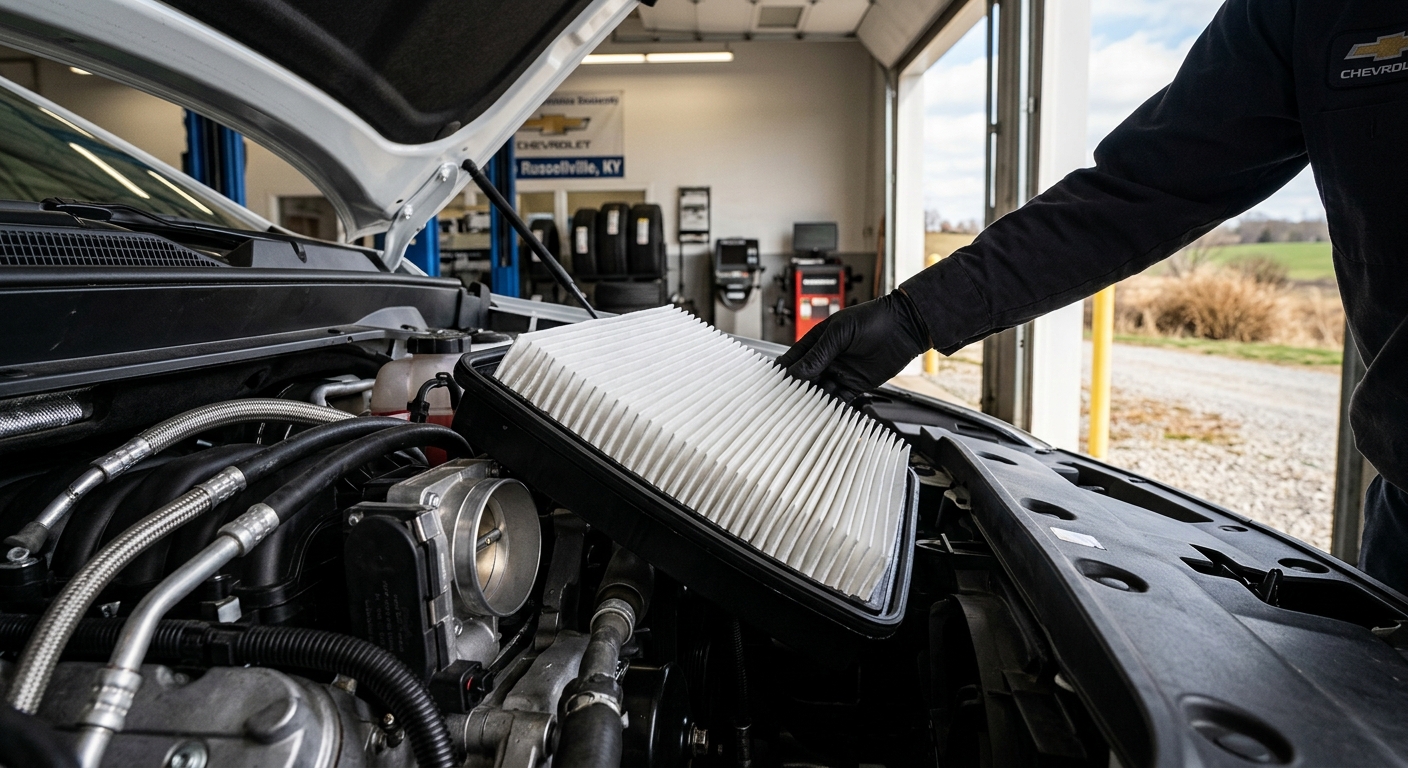
The internal combustion engine is essentially a massive air pump. For every gallon of fuel your vehicle burns, it consumes approximately 10,000 gallons of air. This air must be pristine to prevent microscopic debris from scouring the internal surfaces of your engine. The engine air filter serves as the primary line of defense, trapping dust, sand, and pollen before they can reach the combustion chamber. Without this barrier, even a particle as small as a grain of salt can cause abrasive damage to cylinders and pistons, leading to premature wear and expensive mechanical failures.
Maintaining this component is one of the most cost-effective ways to preserve the long-term health of your vehicle. At our service center at 452 Hopkinsville Rd, we frequently see how a simple filter replacement can restore a vehicle’s lost vigor. If you have noticed a dip in performance or simply cannot remember the last time your filter was inspected, you can reach our team at (270) 713-3840 to verify your specific model’s requirements.
While modern engines are remarkably resilient, they rely on a precise air-fuel mixture to operate efficiently. A clean filter ensures that airflow remains unrestricted, allowing the onboard computer to optimize combustion for power and economy. In a rural environment like Central City, where agricultural dust and gravel roads are common, the air filter works significantly harder than it would in a strictly paved urban setting. Regularly checking this part ensures that your engine isn’t “suffocating” under a layer of trapped Kentucky topsoil.
Table of Contents
- What is the Primary Purpose of an Engine Air Filter?
- Soot, Dust, and Debris: The Science of Combustion Chamber Protection
- Recognizing the Warning Signs of a Clogged Air Filter
- How Driving Environments Alter Your Replacement Interval
- Common Questions About Air Filter Maintenance
- Ensuring Peak Performance and Engine Longevity
What is the Primary Purpose of an Engine Air Filter?
The primary purpose of an engine air filter is to prevent environmental contaminants from entering the engine’s intake system while allowing a high volume of oxygen to pass through. By utilizing pleated paper or synthetic media, the filter captures particulates that would otherwise act like sandpaper inside the engine. This protection is vital for maintaining the integrity of the basic 3 years / 36,000 miles warranty that comes standard on many of our new models.
Engine & Performance
Powertrain specifications across trim levels
| Feature | Work Truck | Custom | Custom Trail Boss | LT | RST | LTZ | LT Trail Boss | ZR2 | High Country |
|---|---|---|---|---|---|---|---|---|---|
| Engine | 5.3L V8 | 2.7L I4 | 3.0L I6 | 5.3L V8 | 6.2L V8 | 6.2L V8 | 6.2L V8 | 6.2L V8 | 6.2L V8 |
Standard across all trims:
| Feature | Included |
|---|---|
| Transmission | Automatic |
| Drivetrain | 4WD |
Consider the diverse lineup of vehicles we offer. A driver choosing from our new Chevrolet Suburban inventory or our Chevrolet Tahoe selection is often looking for a vehicle capable of heavy-duty family hauling and long-distance travel. These large V8 engines require massive amounts of air to generate the necessary torque for towing. If the filter is clogged, the engine must work harder to pull in air, which can lead to increased internal temperatures and unnecessary stress on the powertrain 5 years / 60,000 miles components.
For those who prefer a pre-owned option, such as the various models found in our used truck inventory, the air filter is a key indicator of prior maintenance. A clean filter suggests the previous owner was attentive to the vehicle’s “breathing” requirements. In trucks like the 2026 Chevrolet Silverado 1500, which features a 5.3L V8 engine in the Work Truck trim starting at $45,532, the air filter is designed for easy access, reflecting the truck’s purpose as a durable, maintainable tool for work and play.
- Contaminant Filtration: Stops dirt, soot, and organic debris from reaching the intake manifold.
- Airflow Regulation: Maintains the correct volume of air for the fuel injection system.
- Component Protection: Safeguards sensitive sensors, such as the Mass Airflow Sensor, from debris buildup.
- Efficiency Optimization: Ensures the engine doesn’t waste fuel trying to compensate for air restriction.
Soot, Dust, and Debris: The Science of Combustion Chamber Protection
When you drive through areas with loose soil or heavy construction, your engine’s intake acts like a vacuum. The science of filtration involves balancing two opposing forces: the need to stop tiny particles and the need to allow maximum airflow. Modern filters use deep pleats to increase the surface area of the media, allowing them to trap a high volume of debris without immediately choking off the engine. This is particularly important for turbocharged models like those in our Chevrolet Trailblazer inventory or our Chevrolet Traverse selection, where the turbocharger spins at high speeds and is highly sensitive to any incoming particulates.
Fuel Economy
EPA-estimated fuel economy ratings
| Feature | Work Truck | Custom | Custom Trail Boss | LT | RST | LTZ | LT Trail Boss | ZR2 | High Country |
|---|---|---|---|---|---|---|---|---|---|
| City MPG | 20 mpg | 19 mpg | 23 mpg | 9 mpg | 23 mpg | 9 mpg | 23 mpg | 20 mpg | 23 mpg |
| Highway MPG | 23 mpg | 22 mpg | 27 mpg | 29 mpg | 29 mpg | 29 mpg | 27 mpg | 23 mpg | 29 mpg |
| Combined MPG | 22 mpg | 21 mpg | 25 mpg | 19 mpg | 26 mpg | 19 mpg | 25 mpg | 22 mpg | 26 mpg |
| Fuel Type | Unleaded | Unleaded | Diesel | Unleaded | Unleaded | Unleaded | Unleaded | Unleaded | Unleaded |
Best combined fuel economy: RST at 26 mpg
The efficiency of this process directly impacts your wallet at the pump. For instance, the 2026 Chevrolet Silverado 1500 Custom Trail Boss with the 3.0L I6 diesel engine achieves an impressive 23 mpg city / 27 mpg highway. To maintain those 25 mpg combined figures, the engine needs a steady, clean supply of oxygen. If the filter is saturated with soot or dust, the engine’s computer may adjust the timing and fuel delivery to prevent a “lean” condition, which often results in poorer fuel economy.
In our used SUV inventory, we often point out that a fresh air filter can improve acceleration by 6% to 11% in modern fuel-injected vehicles. This is because a clean filter reduces the “pumping losses” the engine experiences when trying to draw air through a restricted medium. Whether you are merging onto a highway or navigating the rolling hills near Glasgow, having a clean air path ensures your vehicle responds exactly when you press the throttle.
Recognizing the Warning Signs of a Clogged Air Filter
Identifying a failing air filter doesn’t always require a mechanic’s eye; the vehicle often provides several distinct symptoms. One of the most common signs is a noticeable “sluggishness” during acceleration. If you are driving a compact model from our Chevrolet Trax inventory and notice it feels less responsive than usual, the air filter is a prime suspect. Because these smaller engines rely on efficient airflow to make the most of their displacement, a restriction is felt almost immediately.
Visual inspection is the most reliable way to confirm the state of the filter. A new filter is typically white or off-white. As it accumulates debris, it will turn grey or dark brown. If you see actual clumps of dirt, leaves, or “fuzz” in the pleats, it is time for a replacement. When you browse our new vehicles or look through our used car selection, our team ensures every filter is inspected so you start your ownership with a clean slate.
Other symptoms to watch for include:
- Check Engine Light: A restricted filter can cause an incorrect air-fuel ratio, triggering a sensor fault.
- Abnormal Engine Sounds: You may hear “coughing” or popping sounds at idle if the air supply is inconsistent.
- Dark Exhaust Smoke: In older vehicles or high-performance models, a lack of air can cause fuel to be only partially burned, resulting in dark smoke.
- Reduced Fuel Range: If you find yourself visiting the gas station more frequently for your usual commute, check the air box.
How Driving Environments Alter Your Replacement Interval
While many manufacturers suggest a replacement interval every 12,000 to 15,000 miles, your specific environment dictates the real-world timeline. For those who frequently drive on the unpaved rural roads around Barren Plains, the air filter will reach its capacity much faster than a vehicle driven primarily on clean interstate asphalt. In these high-dust environments, we recommend inspecting the filter every 6,000 miles—essentially at every oil change.
Heavy-duty applications also change the math. If you are operating a 6.2L V8 from our Chevrolet Silverado 2500 inventory for towing or farm work, the sheer volume of air moved through the intake increases the rate of particulate accumulation. Our parts department stocks OEM-spec filters designed to handle these higher flow rates, ensuring your truck maintains its factory-rated performance. We also offer a variety of options in our used vehicles under 30K, where a simple $20 to $30 filter can be the difference between a smooth-running engine and one that struggles in summer heat.
The mixed climate of our region also plays a role. Seasonal changes bring different types of debris; spring brings heavy pollen and organic “fuzz” from trees, while dry autumns lead to increased road dust. Because our climate is not subject to extreme, sustained heat or cold, the physical material of the filter tends to hold up well, but the “loading” of the media with local particulates remains the primary reason for replacement.
Common Questions About Air Filter Maintenance
When I am walking a customer through their first maintenance visit, they often ask if they can just “blow out” a dirty filter with compressed air to save money. While this might remove some surface dust, it can actually force smaller particles deeper into the filter media or create microscopic tears in the paper, effectively ruining its ability to protect the engine. We always recommend a full replacement with a genuine part to ensure the seal remains airtight.
For those looking for a long-term ownership experience, you can learn about our CPO program, which includes a rigorous inspection of all filtration systems. If you prefer to handle the maintenance yourself, our team is happy to show you exactly where the air box is located on your specific model. You can learn more about us and our commitment to transparent service by visiting our showroom.
If you are ready to have your vehicle inspected, you can schedule a service appointment online. We also recommend that buyers learn about Newton Fastpass, which streamlines the entire vehicle transition process, including trade-in valuations and service history reviews. Keeping your air filter clean is a small task, but it is one that pays dividends in engine longevity and fuel savings over the life of your vehicle.
Q: What is the primary purpose of an engine air filter?
A: The engine air filter acts as a physical barrier that prevents dirt, dust, and other environmental contaminants from entering the engine’s combustion chamber. By ensuring only clean air mixes with fuel, it protects internal components like pistons and cylinder walls from abrasive wear.
Q: Can a dirty air filter affect my car’s acceleration?
A: Yes, a clogged filter restricts the amount of air reaching the engine, which can reduce acceleration by 6% to 11%. Modern engines require a specific air-to-fuel ratio, and a lack of air forces the computer to limit power to prevent engine damage.
Q: Is the cabin air filter the same thing as the engine air filter?
A: No, they serve completely different roles. The engine air filter protects the engine itself, while the cabin air filter cleans the air that enters the passenger compartment through the HVAC system to remove dust and allergens for the occupants.
Q: How often should I replace my filter if I drive on gravel roads?
A: In high-dust environments, such as rural farming areas or construction zones, we recommend inspecting the filter every 6,000 miles. You will likely need to replace it more frequently than the standard 12,000-mile interval suggested for city driving.
Q: Will a clean air filter help me pass an emissions test?
A: It can help by ensuring the engine is burning fuel as efficiently as possible. A restricted filter can cause a “rich” fuel mixture, which increases exhaust emissions and may trigger a check engine light that would result in an automatic failure.
Pricing
MSRP and destination charges (source: MarketCheck VIN Decode (consensus))
| Feature | Work Truck | Custom | Custom Trail Boss | LT | RST | LTZ | LT Trail Boss | ZR2 | High Country |
|---|---|---|---|---|---|---|---|---|---|
| Starting MSRP | $45,532 | $48,634 | $58,631 | $58,972 | $63,468 | $69,101 | $70,183 | $77,678 | $79,064 |
Lowest starting MSRP: Work Truck at $45,532
Ensuring Peak Performance and Engine Longevity
Protecting your investment starts with the basics of automotive care. Whether you are driving a heavy-duty powerhouse from our new Chevrolet Silverado HD inventory or a fuel-efficient commuter, the engine air filter remains the most vital guardian of your vehicle’s internal health. By ensuring a steady supply of clean air, you maximize fuel efficiency, maintain crisp acceleration, and prevent the kind of internal abrasion that leads to costly long-term repairs.
We invite you to visit us at our showroom located at 452 Hopkinsville Rd to discuss your vehicle’s maintenance schedule. Our factory-trained technicians can perform a quick visual inspection of your air filter during any routine oil change or tire rotation. If you have questions about the specific filtration needs for your model, give us a quick call at (270) 713-3840 to speak with our service advisors.
Beyond maintenance, if you are considering an upgrade to a vehicle with the latest in filtration and engine technology, you can apply for financing now to see your options. For those looking to trade in a current vehicle, we make it easy to value your trade-in online before you visit. We look forward to helping you keep your Chevrolet running at its absolute best for years to come.
0 comment(s) so far on Protecting Your Vehicle with a Clean Engine Air Filter