

How Your Engine Air Filter Protects Your Vehicle on Local Roads
How Your Engine Air Filter Protects Your Vehicle on Local Roads
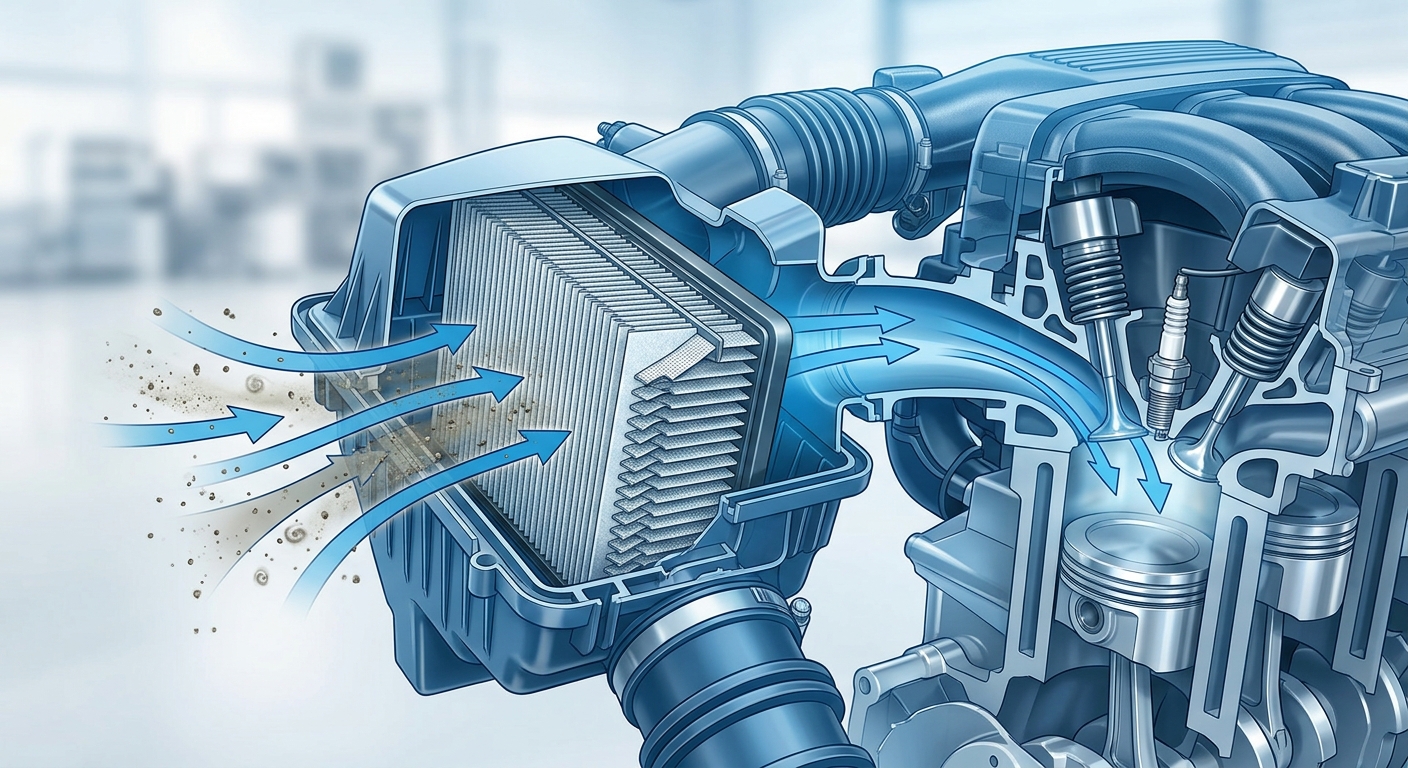
An internal combustion engine requires a massive, continuous volume of clean air to operate efficiently. For every single gallon of fuel your vehicle burns, the engine consumes approximately 10,000 gallons of air. The primary function of an engine air filter is to act as a physical barrier, stopping dust, dirt, pollen, and other airborne particles from entering the engine’s intake and combustion chambers [7, 8]. Without this protection, airborne grit can cause accelerated wear to pistons, cylinder walls, and valves, leading to premature mechanical failure [7, 8].
Even tiny contaminants pose a major threat to your powertrain. If particles as small as a grain of salt manage to bypass filtration and enter the engine, they act as an abrasive sandpaper-like agent against the metal surfaces. Over time, this microscopic scratching degrades the tight seals inside the cylinders, which can cause loss of compression and require expensive internal engine repairs.
When you are driving a heavy-duty truck or a family vehicle, maintaining clean airflow is critical to preserving the life of your vehicle. To explore highly capable vehicles built to handle demanding road conditions, you can shop new Chevrolet inventory or look through our explore Chevrolet models resource. For those who need maximum towing and hauling capability, you can shop new Chevrolet Silverado HD models or specifically shop new Chevrolet Silverado 2500 trucks.
If you prefer a versatile daily driver, you can shop new Chevrolet Trax inventory, check out our midsize options when you shop new Chevrolet Traverse inventory, or opt for a compact crossover when you shop new Chevrolet Trailblazer inventory. Families needing maximum passenger space can shop new Chevrolet Tahoe inventory or shop new Chevrolet Suburban inventory. We also offer efficient alternatives for those looking to transition away from traditional combustion; you can shop new Chevrolet Equinox EV models, shop new Chevrolet Blazer EV crossovers, shop new Chevrolet Bolt EV hatchbacks, or shop new Chevrolet Bolt EUV models.
For gas-powered SUVs and sports cars, you can shop new Chevrolet Equinox inventory, shop new Chevrolet Blazer inventory, or shop new Chevrolet Corvette inventory. High-performance enthusiasts can also shop new Chevrolet Corvette E-Ray hybrids, shop new Chevrolet Corvette Z06 track machines, or shop new Chevrolet Corvette ZR1 supercars. If you need a light-duty pickup or a midsize truck, you can shop new Chevrolet Silverado 1500 models, shop new Chevrolet Silverado EV pickups, or shop new Chevrolet Colorado inventory. You can also view our complete lineup of browse new vehicles online, dial our team at (270) 713-3840, or find our physical address using get directions to Newton Chevrolet of Russellville.
Table of Contents
- What Are the Common Symptoms of a Bad Engine Air Filter?
- Recognizing the Warning Signs of Airflow Restriction and Poor Engine Combustion
- How Environmental Conditions and Dust in Central City Impact Filter Life
- Standard Replacement Intervals and the Simplicity of a Visual Filter Inspection
- OEM Quality vs Aftermarket Filters for Proper Sealing and Engine Protection
- Frequently Asked Questions About Engine Air Filter Performance and Care
- Keep Your Chevrolet Running Smoothly with Professional Service
What Are the Common Symptoms of a Bad Engine Air Filter?
What are the common symptoms of a bad engine air filter? When the filter media becomes saturated with dirt and debris, it restricts the volume of air reaching the combustion chambers [5, 7]. This restriction forces the engine to work much harder to pull in air, disrupting the delicate balance of the air-fuel mixture. The most frequent warning signs of a clogged filter include:
- Sluggish Acceleration: You may notice a general lack of responsiveness or a distinct lag when pressing the gas pedal.
- Reduced Engine Power: The engine cannot produce its rated horsepower when starved of oxygen, making climbing hills or passing other vehicles difficult.
- Rough Idling or Engine Vibrations: A restricted air supply can cause the engine to shake, shudder, or idle unevenly when stopped.
- Unusual Engine Noises: A clogged filter can lead to coughing, popping, or spitting sounds as the engine struggles to breathe.
- Decreased Fuel Efficiency: While modern engine computers attempt to compensate for restricted airflow, a heavily clogged filter still forces the engine to run inefficiently, leading to higher fuel consumption [5, 7].
If your vehicle exhibits any of these symptoms, it is wise to address the issue promptly before minor performance glitches turn into expensive mechanical repairs. Drivers seeking pre-owned vehicles that have been thoroughly inspected for performance and reliability can browse used vehicles in our inventory. To learn more about our commitment to quality maintenance and vehicle preparation, you can visit our homepage. If you are ready to bring your current vehicle in for an inspection, you can find our operating hours and location details by checking our get directions & hours page.
Recognizing the Warning Signs of Airflow Restriction and Poor Engine Combustion
A heavily restricted air filter directly impacts the combustion process inside your engine. When oxygen is limited, the fuel injected into the cylinders cannot burn completely. This incomplete combustion often results in unburnt fuel being pushed out into the exhaust system, which can manifest as dark gray or black smoke exiting the tailpipe. You may also notice a distinct smell of raw gasoline near the vehicle, signaling that the engine is running “rich” (too much fuel and not enough air).
Furthermore, this unburnt fuel can quickly coat and foul your spark plugs. When spark plugs become covered in fuel residue and soot, they cannot produce a clean, consistent spark to ignite the air-fuel mixture. This leads to engine misfires, poor throttle response, and a rough ride. If left unaddressed, fouled spark plugs will eventually trigger the check engine light on your dashboard, as the onboard diagnostics system detects the misfires and airflow anomalies.
Replacing a clogged filter can restore proper airflow and improve acceleration by 6% to 11% on modern fuel-injected vehicles. If you are shopping for a budget-friendly vehicle and want to make sure it is running in top condition, we encourage you to shop used vehicles under 30K. We pride ourselves on transparent service, and you can see what our local customers think of their experiences by reading through our leave us a review page.
How Environmental Conditions and Dust in Central City Impact Filter Life
Your local driving environment plays a massive role in how quickly your engine air filter becomes clogged. While standard maintenance schedules provide a baseline, real-world conditions dictate the actual lifespan of your filter. For example, driving frequently on the rural, agricultural, and unpaved roads around Central City exposes your vehicle to high concentrations of airborne dust, soil particles, and agricultural debris. This heavy particulate matter can quickly fill the pleats of your filter, cutting its effective service life in half compared to vehicles driven solely in paved, low-dust environments [2, 3, 5].
Technical maintenance guidelines emphasize that severe dust conditions may require engine air filter replacement intervals that are two to three times more frequent than the manufacturer’s standard specification [5, 7]. In highly dusty agricultural areas, a filter can become completely choked in just a few thousand miles. Failing to inspect and replace the filter under these conditions means your engine is constantly fighting for air, reducing its working efficiency and putting extra strain on internal components.
For drivers who use their vehicles for farming, towing, or navigating dusty job sites, keeping a fresh filter in your truck is essential for maintaining torque and horsepower. If you are looking for a durable pre-owned pickup that can handle these demanding environments, you can shop used trucks. To see how we support our local drivers with dependable vehicles and honest service, you can read customer testimonials from members of our community.
Standard Replacement Intervals and the Simplicity of a Visual Filter Inspection
Most passenger-car manufacturers specify a baseline engine air filter replacement interval of roughly 15,000 to 30,000 miles or once a year, whichever comes first [2, 7, 9]. However, because driving styles and local environments vary so widely, many service guides recommend visually inspecting the engine air filter at every oil change, or at least every six months [2, 3, 4]. A visual inspection is a quick and highly reliable way to determine if your filter is still performing its job or if it is ready for retirement [2, 3, 4].
To perform a visual inspection, the filter is removed from its housing and held up to a bright light source. If the filter media is clean, light will pass through the paper pleats easily. If the filter is dark, gray, or filled with trapped dirt, insects, and debris, and the light is completely blocked, the filter has reached the end of its useful life and must be replaced [2, 3, 4].
Regularly scheduled maintenance prevents restricted airflow from degrading your engine’s performance. If your vehicle is due for an inspection, you can easily schedule service appointment online to have our certified technicians take a look. For those who prefer to handle quick garage maintenance themselves, you can visit our parts department to purchase the correct filter for your specific model. If you are looking to upgrade your daily ride to a reliable pre-owned family vehicle, you can also shop used SUVs in our current inventory.
OEM Quality vs Aftermarket Filters for Proper Sealing and Engine Protection
When it comes time to replace your engine air filter, the quality of the replacement part matters just as much as the replacement interval. Original Equipment Manufacturer (OEM) filters are designed and engineered specifically for your vehicle’s engine housing. This precise engineering ensures an airtight seal around the edges of the filter frame. A proper seal is critical; if a filter does not fit perfectly, dirty air can bypass the filter media entirely, allowing harmful dust and abrasive grit directly into your engine’s intake manifold.
While some aftermarket filters may look similar, they often use lower-grade paper media or slightly different dimensions that fail to seal correctly. Investing in high-quality OEM filters ensures optimal filtration efficiency and structural integrity, protecting your engine from long-term wear.
If you are considering upgrading your vehicle or trading it in for a newer model with a fresh warranty, our team can help you value your trade-in to see what your current car is worth. We are committed to helping you make informed decisions about your automotive care, and you can meet our staff online to learn more about the factory-trained experts who service your vehicle.
Frequently Asked Questions About Engine Air Filter Performance and Care
Q: Can a dirty engine air filter cause my car to fail an emissions test?
Yes. A heavily clogged air filter restricts the amount of oxygen entering the combustion chamber, which can cause the engine to run “rich” by burning too much fuel relative to air. This incomplete combustion increases the level of unburnt hydrocarbons and carbon monoxide in your exhaust gases, which can trigger a check engine light and cause your vehicle to fail a state emissions test.
Q: Will a dirty engine air filter damage my turbocharger?
Yes, a clogged air filter can damage a turbocharged engine. Turbochargers rely on a high volume of clean, unrestricted airflow to compress air into the engine. If the filter is restricted, the turbocharger has to work significantly harder, which increases operating temperatures and puts excessive stress on the turbo bearings and seals, potentially leading to premature turbo failure.
Q: What is the difference between an engine air filter and a cabin air filter?
While both filters clean the air, they serve completely different purposes. The engine air filter cleans the air entering your engine’s combustion chamber to protect internal engine parts from wear [7, 8]. The cabin air filter cleans the air entering the interior cabin through the heating, ventilation, and air conditioning (HVAC) system, removing dust, pollen, and allergens for the comfort of the passengers.
Q: Can I clean my dirty paper engine air filter with compressed air?
No, you should not attempt to clean a standard paper engine air filter with compressed air. Blasting the filter with high-pressure air can tear the microscopic fibers of the paper media, creating invisible holes that allow dirt and abrasive grit to pass directly into your engine. If a paper filter is dirty, the only safe solution is to replace it.
If you want to streamline your next vehicle purchase, you can learn about Newton Fastpass to see how we make buying online simple and transparent. You can also explore our certified pre-owned vehicles and learn about CPO program benefits, or visit our portal to learn about us and our commitment to our guests.
Keep Your Chevrolet Running Smoothly with Professional Service
Regular maintenance is the key to keeping your vehicle running at peak performance. Neglecting your engine air filter can lead to sluggish acceleration, poor fuel economy, and unnecessary engine wear [5, 7]. Fortunately, keeping your filter clean is one of the easiest and most affordable ways to protect your powertrain. Our factory-trained technicians can quickly inspect your filter during your routine oil change and replace it with a high-quality OEM filter if necessary.
If you are noticing any signs of reduced engine performance, or if you are simply due for your annual maintenance, we are here to help. You can easily start your next vehicle purchase or upgrade by choosing to apply for financing now online. For personalized assistance, feel free to give our service department a quick call to speak with an advisor, or stop by our service center at our Russellville dealership address to have our team inspect your vehicle today.
0 comment(s) so far on How Your Engine Air Filter Protects Your Vehicle on Local Roads