

How Much Does an Oil Change Cost?
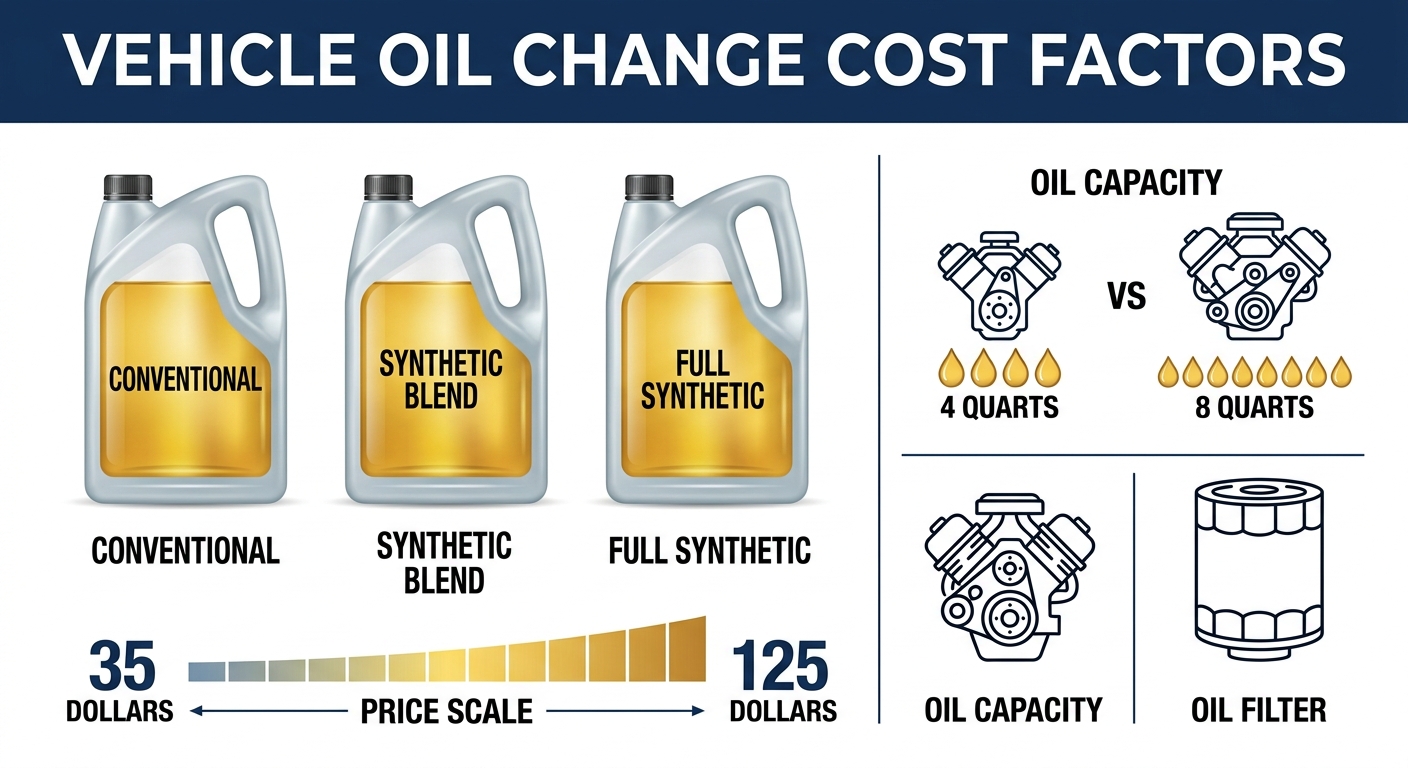
An oil change typically costs between $35 and $125, depending primarily on whether your vehicle requires conventional, synthetic blend, or full synthetic oil, as well as total engine oil capacity and filter specifications. Conventional oil services sit at the lower end of that range, while full synthetic service for larger truck engines lands higher due to specialized formulations and larger fluid volumes.
Understanding what goes into the price of an oil change helps drivers plan routine vehicle maintenance accurately. The primary factor influencing price is the type of motor oil required by your vehicle’s manufacturer. Modern engines engineered to tight tolerances generally require dexos 1 synthetic oil or full synthetic blends, which cost more per quart than conventional oils but deliver substantially longer service intervals and superior thermal protection.
Engine fluid capacity also directly affects total cost. A compact four-cylinder car taking 4 or 5 quarts of fluid costs less to service than a full-size V8 truck requiring 8 quarts of synthetic fluid alongside a heavy-duty oil filter. Additional service components, such as replacing the drain plug washer, disposing of used fluid in compliance with environmental regulations, and installing an original equipment manufacturer filter, are routinely incorporated into standard service charges.
Routine oil maintenance remains one of the most cost-effective investments in overall vehicle upkeep. Skipping routine service to save on immediate maintenance expenses routinely leads to internal oil breakdown, severe sludge accumulation, and accelerated wear on major components. Drivers can confirm precise oil requirements for their vehicle by visiting our service center in Russellville or giving our team a quick call to get an exact estimate for their model.
Table of Contents
- Why Is Regular Engine Oil Maintenance Necessary for Vehicle Operation?
- How Does Engine Oil Provide Internal Lubrication and Reduce Friction?
- In What Ways Does Motor Oil Help Cool Internal Engine Components?
- What Role Does Engine Oil Play in Cleaning and Preventing Corrosion?
- How Do Oil Viscosity, Additives, and Filters Protect Engine Life?
- Synthetic vs. Conventional Oil: How Often Should You Change Your Oil?
- Common Questions About Vehicle Oil Changes and Engine Health
- Schedule Certified Engine Maintenance
Why Is Regular Engine Oil Maintenance Necessary for Vehicle Operation?
Regular engine oil maintenance is necessary because fresh oil forms a continuous protective barrier between rapidly moving internal metal parts, neutralizing destructive friction, dispersing extreme combustion heat, and preventing harmful sludge accumulation. Without routine replacements, degraded oil loses its protective viscosity, directly accelerating mechanical wear and potentially triggering severe engine damage.
Engine oil serves as the primary defense system for internal propulsion systems. As an engine operates, fuel combustion generates intense heat while pistons, valves, and crankshafts move at thousands of revolutions per minute. Fresh motor oil coats these components in a micro-thin hydraulic barrier that keeps metal surfaces from grinding together. Over thousands of miles, however, heat cycling breaks down chemical additives, and the oil becomes saturated with soot, unburned fuel, carbon buildup, and microscopic metal filings.
Allowing contaminated oil to circulate through an engine causes rapid degradation of internal components. Thinned out or contaminated fluid fails to separate moving parts, resulting in elevated operating temperatures and increased friction. Over time, oxidized oil thickens into dark sludge that blocks critical oil channels, starving upper valve trains and bearings of essential lubrication. Routine maintenance prevents sludge formation and protects vital engine components, ensuring long-term mechanical reliability under severe driving conditions.
Local driving environments also dictate how quickly oil degrades. For instance, traveling rural agricultural routes around Elkton frequently exposes engines to airborne dust and agricultural debris, putting higher demand on air intake filtration and engine oil purity. Maintaining fresh oil safeguards major components and keeps your engine operating within factory specifications. Drivers exploring our inventory of new Chevrolet vehicles or maintaining an existing vehicle can easily schedule a service appointment online to preserve engine health, or browse our selection of quality pre-owned vehicles knowing properly maintained engines deliver lasting value.
How Does Engine Oil Provide Internal Lubrication and Reduce Friction?
Engine oil provides internal lubrication by creating a microscopic hydrodynamic film across engine components like pistons, crankshaft bearings, and camshafts, preventing direct metal-on-metal contact. This fluid boundary allows mechanical components to glide smoothly, minimizing rotational friction and reducing mechanical stress.
Inside an internal combustion engine, clearances between moving metal components are measured in thousandths of an inch. When the crankshaft rotates or pistons travel within cylinder walls, fluid dynamic pressure forces motor oil into these narrow tolerances. This process creates a pressurized layer of oil that floats heavy components, preventing high-friction contact during engine operation.
Without adequate hydrodynamic lubrication, metal components undergo aggressive mechanical wear known as galling. Piston rings scuff cylinder liners, camshaft lobes wear down, and connecting rod bearings overheat. Proper lubrication drastically reduces parasitic drag inside the crankcase, allowing the engine to turn efficiently while preserving engine power and maximizing fuel economy.
Maintaining proper fluid levels and viscosity ensures the oil pump maintains adequate pressure to lift fluid to the top of the engine during cold starts. High-quality synthetic oils maintain film strength even under high load conditions, protecting critical components when towing heavy loads or accelerating quickly. Keeping internal components properly lubricated protects overall engine performance and supports maximum resale value when you decide to value your trade-in vehicle online.
In What Ways Does Motor Oil Help Cool Internal Engine Components?
Motor oil cools internal engine components by absorbing extreme heat generated in high-temperature zones—such as the undersides of pistons and cylinder walls—and transporting that thermal energy down to the oil pan for dissipation. While liquid coolant manages the cylinder head and engine block jacket, circulating oil directly cools hot moving parts that coolant channels cannot reach.
During combustion, internal engine temperatures can spike dramatically near the piston crowns and combustion chambers. Engine oil is sprayed or pumped directly onto these high-heat areas, picking up excess thermal energy before draining back down into the oil sump. As the oil pools in the oil pan, ambient airflow beneath the moving vehicle cools the fluid before the oil pump recirculates it through the engine block.
When engine oil degrades, its thermal conductivity decreases significantly. Oxidized oil and heavy sludge coat internal metal surfaces like an insulating blanket, trapping extreme heat inside critical engine components rather than transferring it away. This localized overheating causes metal parts to expand beyond design tolerances, increasing internal stress and risking piston scuffing or head gasket failure.
Sustained high-speed driving and heavy traffic build thermal stress within an engine. Daily commutes along highway corridors into Clarksville require reliable oil cooling to prevent thermal breakdown during stop-and-go driving. Ordering OEM-rated oil and high-flow filters through our genuine GM parts department ensures your cooling system maintains optimal thermal protection, while drivers planning their next vehicle upgrade can explore flexible purchasing pathways by applying for auto financing online.
What Role Does Engine Oil Play in Cleaning and Preventing Corrosion?
Engine oil cleans internal surfaces by holding dirt, combustion soot, and microscopic metal particles in suspension so they can be captured by the oil filter before causing internal damage. Additionally, detergent and anti-corrosion additives neutralize combustion acids and coat internal metal surfaces to stop rust and oxidation from forming.
Every time fuel ignites inside an engine cylinder, small amounts of moisture, unburned hydrocarbons, and acidic vapors bypass the piston rings into the crankcase. Standard engine oil is formulated with detergent and dispersant additives designed to treat these chemical contaminants. Detergents break down carbon deposits on pistons and valves, while dispersants lock microscopic particles in fluid suspension to keep them from clumping together into stubborn engine sludge.
Corrosion protection is another primary function of high-grade engine oil. When an engine cools after operation, ambient moisture condenses inside the crankcase. Water combined with sulfur byproducts from combustion creates corrosive acids capable of pitting metal surfaces, damaging precision bearings, and rusting cylinder walls. Anti-corrosion additives inside fresh motor oil neutralize these acidic compounds on contact.
As motor oil ages, its protective chemical additives deplete. Once dispersants become saturated, accumulated soot settles onto internal engine surfaces, clogging tight passages and starving valve lifters of vital lubrication. Replacing saturated oil at recommended intervals flushed out held contaminants and replenishes vital chemical additives needed to shield metallic surfaces against rust and acid wear.
How Do Oil Viscosity, Additives, and Filters Protect Engine Life?
Oil viscosity rating determines how effectively fluid flows during cold startups and maintains protective strength under intense engine heat, while specialized chemical additives reinforce oil stability and oil filters trap harmful debris. Together, proper viscosity, advanced additives, and high-efficiency filters maintain clean lubrication passages and shield critical engine components from wear.
Viscosity represents a fluid’s resistance to flow. Multi-grade engine oils, designated by ratings like 5W-30 or 0W-20, use specialized polymer modifiers to adapt to changing operating temperatures. The first number followed by the “W” indicates low-temperature flow performance, ensuring rapid oil delivery to upper valvetrains during cold morning startups. The second number indicates fluid thickness at normal operating temperatures, ensuring the oil maintains a strong protective layer under severe thermal stress.
Engine oil formulations rely heavily on specialized additive packages to handle extreme internal environments. Common additives include:
- Detergents to scrub away varnish and soft carbon deposits from internal walls.
- Dispersants to suspend soot particles and prevent heavy sludge formation.
- Friction modifiers to smooth mechanical contact and enhance fuel economy.
- Anti-wear agents such as zinc compounds that form sacrificial protective coatings on metal surfaces.
- Viscosity index improvers to prevent fluid thinning during extended high-heat operation.
The engine oil filter acts as the primary mechanical barrier within the lubrication system. As oil circulates, it passes through synthetic filter media engineered to trap particles as small as 25 microns. Modern oil filters include an anti-drainback valve to prevent fluid from draining into the oil pan when the engine is turned off, ensuring immediate oil pressure upon restart. Replacing the oil filter with every oil change prevents bypass valves from opening, ensuring only clean, filtered oil reaches precision engine bearings.
Synthetic vs. Conventional Oil: How Often Should You Change Your Oil?
Synthetic oil should typically be changed every 7,500 to 10,000 miles or at least once every 12 months, whereas conventional oil generally requires replacement every 3,000 to 5,000 miles. Modern Chevrolet models feature the GM Engine Oil Life System, which tracks driving parameters and signals service when remaining fluid life drops to 15%.
Full synthetic oils are chemically synthesized to achieve uniform molecular structures, offering superior thermal stability, oxidation resistance, and fluid flow compared to conventional petroleum-based oils. While conventional oil breaks down rapidly under intense heat and forms sludge over shorter spans, synthetic oil retains its protective viscosity across extended service intervals. This enhanced durability allows drivers using full synthetic formulations to safely extend time between oil services.
Service intervals depend heavily on driving habits and environmental conditions. Operating under severe conditions—such as frequent short trips in cold weather, extensive idling, heavy towing, or driving in dusty environments—accelerates oil degradation. The GM Engine Oil Life System accounts for engine revolutions, operating temperatures, and vehicle load to calculate actual fluid depletion rather than relying solely on mileage.
Drivers should monitor their vehicle dashboard display and schedule service when the system reads 15% remaining oil life, taking immediate action if the monitor reaches 0%. First-time service customers often ask whether full synthetic oil is necessary for older or lower-mileage engines. Service advisors highlight that modern tight-tolerance engines require synthetic specifications like dexos1 synthetic oil to preserve powertrain warranty coverage, optimize efficiency, and maximize engine longevity.
Common Questions About Vehicle Oil Changes and Engine Health
Q: Can I switch between synthetic and conventional oil during routine service?
Yes, switching between synthetic and conventional motor oil is completely safe for modern engines, provided the oil meets the manufacturer’s minimum viscosity and quality specifications. Full synthetic and conventional oils are chemically compatible, meaning mixing them will not harm internal components. However, using conventional oil in an engine designed for dexos1 synthetic oil can reduce service intervals and compromise performance. For optimal engine protection and long-term durability, sticking with full synthetic oil is recommended.
Q: What happens if I keep driving after the oil life monitor hits zero percent?
Driving after the oil life monitor reaches 0% exposes your engine to severe wear because the oil’s protective additives and detergents are fully depleted. Saturated oil can no longer suspend dirt or protect metal components from friction, leading to elevated operating temperatures, accelerated bearing wear, and sludge accumulation. Continuous operation with depleted oil risks voiding factory warranty coverage and causing permanent engine damage. Scheduling immediate maintenance protects major mechanical components.
Q: How do I read the engine oil dipstick correctly to check fluid level and quality?
To check your oil level correctly, park your vehicle on a level surface, turn off the engine, and wait a few minutes for the oil to drain back into the oil pan. Pull the dipstick out, wipe it clean with a rag, reinsert it fully, and pull it out again. The fluid level should rest between the upper and lower crosshatch marks. Inspecting the oil on the rag also reveals fluid quality; clear brown oil indicates healthy fluid, while thick, gritty, or black oil indicates an immediate oil change is needed.
Q: Why does my vehicle require more oil capacity during a filter replacement?
An engine requires extra oil during a full service because the replacement filter housing holds a significant volume of fluid that must be filled. When a technician removes the old oil filter, the fluid trapped inside its media and internal reservoir drains out along with the oil pan contents. Adding fresh oil accounts for both the crankcase capacity and the empty volume of the new filter. Running an engine without accounting for filter capacity leaves the overall oil level low.
Q: Does changing my own oil affect my vehicle’s factory warranty coverage?
Performing your own oil changes does not void your factory warranty, provided you use oil and filters that meet manufacturer specifications and follow recommended maintenance intervals. However, you must keep detailed records, including purchase receipts for specified oils like dexos1 synthetic oil and OEM filters, along with records of dates and mileage. Choosing professional service simplifies maintenance tracking, ensuring your complete vehicle history is logged directly into system records. Drivers interested in maintaining full vehicle protection can explore our Newton certified pre-owned program benefits, streamline their vehicle management through the Newton Fastpass online buying process, or learn more about our commitment to vehicle care by visiting our dealership history and team page.
Schedule Certified Engine Maintenance
Protecting your engine’s longevity, efficiency, and performance starts with regular oil changes using factory-approved lubricants and filters. Routine maintenance prevents costly repairs, preserves fuel efficiency, and keeps your vehicle running smoothly for years to come.
Our factory-trained technicians at Newton Chevrolet of Russellville understand the exact lubrication requirements of your vehicle. Whether your oil life monitor is showing low remaining life or you are due for seasonal maintenance, our service team delivers fast, thorough service tailored to your vehicle’s specific engine design.
Take proactive steps to protect your vehicle’s engine health today. You can get turn-by-turn directions to our certified pre-owned inventory and service center by visiting our Russellville service facility, or speak directly with a service advisor by giving our team a quick call to schedule your next oil change.
0 comment(s) so far on How Much Does an Oil Change Cost?