

What Brake Symptoms Should You Address Before Towing a Heavy Load in Your Chevrolet Truck?
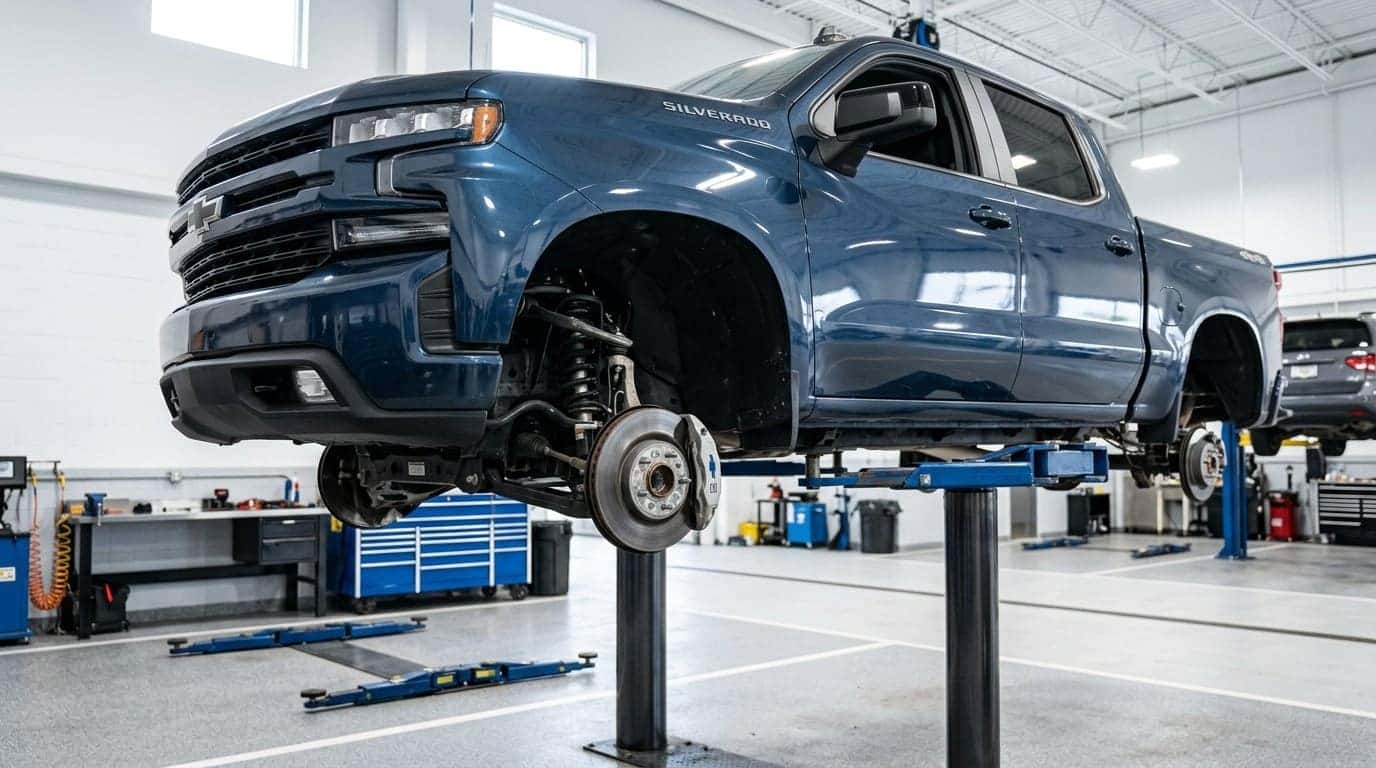
Before towing a heavy load in a Chevrolet truck, you must address steering wheel pulsation or pedal vibration, high-pitched squealing, metallic grinding, a soft or spongy brake pedal, vehicle pulling to one side during deceleration, and friction pad thickness measuring below 3 millimeters. Towing dramatically increases kinetic energy and thermal stress on braking components, turning minor pad or rotor defects into immediate stopping hazards when hauling heavy trailers down steep grades.
When trailering heavy machinery or recreational campers, your truck’s braking system works twice as hard as it does during everyday unladen driving. High brake temperatures can cause fluid vapor lock or severe pad fade if the system is already degraded. A firm brake pedal feel and smooth rotor engagement are vital for maintainable control when towing heavy loads. If pad lining drops under 2 millimeters, metal backing plates will score brake rotors, reducing friction surfaces when you need stopping power most.
Our service team recommends doing a visual and functional check before hitching up for a major haul. Look through your wheel spokes with a flashlight to inspect outer pad thickness against the rotor face, and pay close attention to any sudden pedal drop or dashboard brake warning indicators. Addressing these warning signs early keeps your truck running safely and prevents severe damage to friction surfaces. For expert multi-point inspections or prep work before your next trip, you can find our Russellville dealership address right on Hopkinsville Road, or reach our service department directly at (270) 713-3840 to speak with a technician.
Table of Contents
- What Are the Symptoms of Worn Suspension Components on a Chevy Truck Before Towing?
- Do Semi-Metallic Brake Pads Cause Faster Rotor Wear and Vibration When Hauling?
- What Feature Does the 2027 Chevrolet Integrated Trailer Brake Controller Provide?
- What Is the Maximum Towing Capacity for the 2027 Chevrolet Silverado 3500HD?
- What Is the Cost to Repair or Upgrade Suspension Components on a Chevy Truck for Towing?
- Frequently Asked Towing Maintenance Questions for Chevrolet Owners
- Schedule Towing Maintenance and Upgrades at Newton Chevrolet
What Are the Symptoms of Worn Suspension Components on a Chevy Truck Before Towing?
Worn suspension components reveal themselves through excessive rear-end sag under tongue weight, body roll through high-speed cornering, persistent bouncing after hitting road swells, fluid leaking from shock absorber bodies, clunking noises over rough pavement, and severe tread cupping on front or rear tires. Recognizing these handling defects before loading a trailer prevents trailer sway, front-axle unloading, and loss of steering control.
Proper tongue weight distribution depends on solid spring rates and responsive damping. When shock absorbers lose internal hydraulic pressure, the rear axle cannot quickly settle after encountering bumps, leading to dangerous oscillation between the truck and trailer frame. Furthermore, worn ball joints and control arm bushings create steering wander, making it difficult to hold a straight line on rutted highways.
Drivers hauling livestock trailers across agricultural acreage in Elkton often notice suspension fatigue first through uneven vehicle squat and light steering feel. When heavy tongue weight compresses weakened leaf springs, the front headlights point upward and front tire contact patches shrink. Upgrading or re-conditioning heavy-duty shocks and leaf packs restores factory ride height, keeps tire contact level, and ensures predictable stability under load. If you are considering an upgrade or shopping for a tow-ready rig, exploring our pre-owned truck inventory gives you access to work-ready models equipped with heavy-duty suspension packages.
Do Semi-Metallic Brake Pads Cause Faster Rotor Wear and Vibration When Hauling?
Semi-metallic brake pads cause faster rotor wear than ceramic friction materials because they contain abrasive steel, iron, and copper fibers designed for heavy thermal loads. While semi-metallic compounds provide exceptional heat transfer and fade resistance required for heavy trailering, their aggressive metallic composition wears cast-iron rotor surfaces down quicker and can create surface vibration if thermal deposits build up unevenly under hard braking.
The trade-off between pad life, rotor longevity, and heavy-load performance comes down to heat management:
- Semi-metallic pads dissipate extreme heat rapidly, making them ideal for heavy bumper-pull and gooseneck trailering.
- Ceramic pads run cleaner and quieter during unloaded commutes, but they tend to glaze over and lose friction when subjected to continuous mountain grade braking.
- Rotor scoring occurs faster with semi-metallic compounds, often requiring rotor resurfacing or replacement during every second pad change.
- Hot pad material transfers onto cold rotors during prolonged stops, forming uneven high spots that feel like warped rotors through the pedal.
Choosing the right friction material depends entirely on how you use your pickup. If your truck spends most of its time hauling heavy equipment, the thermal endurance of semi-metallic linings outweighs the additional rotor wear. For truck owners preparing for heavy work, scheduling a brake inspection online with our certified technicians ensures your friction pads and rotors match your towing demands. For shoppers seeking high-capability rigs ready for tough jobs, browsing our certified pre-owned truck selection delivers factory-backed peace of mind.
What Feature Does the 2027 Chevrolet Integrated Trailer Brake Controller Provide?
The 2027 Chevrolet integrated trailer brake controller provides driver-adjustable gain output control and automatic proportional synchronization between the truck’s braking system and electric or electric-over-hydraulic trailer brakes. Built directly into the dashboard electrical architecture, this system monitors truck deceleration, pedal force, and stability control inputs to deliver smooth, precise braking force to the trailer axles without manual lever pulling.
Key capabilities provided by the factory integrated trailer brake controller include:
- Gain adjustment controls that allow drivers to fine-tune trailer braking output based on total load weight and road surface traction.
- Automatic integration with StabiliTrak control systems to help manage trailer sway by selectively applying trailer brakes when sway is detected.
- Real-time diagnostic alerts displayed on the digital driver cluster warning of trailer wiring disconnects or electrical short circuits.
- Dedicated profile memory presets that store custom gain settings for multiple light-duty and heavy-duty trailers.
By eliminating the delayed response times common with aftermarket brake controllers, the integrated unit helps prevent dangerous trailer push during rapid stops on highway exits or downhill stretches. For drivers upgrading their trailering fleet or financing a new build equipped with advanced towing electronics, completing a submit a financing application online streamlines your purchasing process before visiting our showroom floor.
What Is the Maximum Towing Capacity for the 2027 Chevrolet Silverado 3500HD?
The maximum towing capacity for the 2027 Chevrolet Silverado 3500HD reaches up to 36,000 pounds in a gooseneck or 5th-wheel configuration when properly equipped with the available 6.6L Duramax Turbo-Diesel V8 engine. For conventional bumper-pull towing, heavy-duty Chevrolet trucks deliver ratings up to 20,000 pounds, making the lineup capable of handling massive construction machinery, large horse trailers, and multi-car haulers.
Actual trailering limits depend heavily on vehicle configuration, cab style, box length, rear axle ratio, and single or dual rear-wheel setups:
| Configuration | Powertrain | Max Conventional Towing | Max Gooseneck / 5th-Wheel Towing |
|---|---|---|---|
| Silverado 3500HD DRW Regular Cab | 6.6L Duramax Turbo-Diesel | 20,000 lbs | 36,000 lbs |
| Silverado 3500HD SRW Crew Cab | 6.6L Duramax Turbo-Diesel | 20,000 lbs | 21,600 lbs |
| Silverado 3500HD SRW Crew Cab | 6.6-liter V8 Gas | 16,000 lbs | 18,700 lbs |
| Silverado 1500 Crew Cab | 5.7-liter V8 Gas | 13,700 lbs | N/A |
Matching your trailer’s Gross Vehicle Weight Rating (GVWR) to your truck’s Gross Combined Weight Rating (GCWR) is essential for safe highway operation. Alongside heavy-duty 3500HD models, the light-duty Silverado lineup also offers substantial capability. The redesigned Silverado 1500 lineup features powertrains including the 2.7-liter TurboMax, 3.0-liter Duramax turbodiesel, new 5.7-liter V8, and 6.6-liter V8, paired with the Allison 10-speed automatic transmission on select engines. Off-road variants like the ZR2 feature 35-inch mud-terrain tires and front and rear electronic locking differentials for extreme trail performance.
What Is the Cost to Repair or Upgrade Suspension Components on a Chevy Truck for Towing?
Replacing worn factory shock absorbers on a Chevrolet truck costs between $350 and $700 per pair installed, while upgrading with heavy-duty rear air helper spring kits or auxiliary leaf spring packs ranges from $500 to $1,200 installed. Investing in suspension maintenance or heavy-duty load-leveling components eliminates rear sag, keeps headlight beams level, and protects expensive axle housing seals from bottoming-out damage.
Common suspension service and upgrade costs breakdown as follows:
- Heavy-Duty Shock Absorber Replacement: $350 to $700 installed per axle (includes premium gas-charged units like DSSV or Z71 off-road dampers).
- Rear Air Helper Spring Installation: $500 to $1,200 installed (provides adjustable air pressure to compensate for heavy tongue loads).
- Heavy-Duty Sway Bar Upgrades: $400 to $800 installed (reduces body roll during highway maneuvers with tall enclosed trailers).
- Front Suspension Bushings and Ball Joint Replacement: $600 to $1,400 installed (restores precise steering tracking under load).
Truck owners hauling heavy boats or campers around river basins near Franklin find that air helper springs provide the versatility needed for dual-purpose driving. You can run low air pressure for a smooth unladen ride during weekday commutes, then inflate the air springs to level out the truck bed when hitching up for weekend recreation. If you are preparing to upgrade your truck or trade up to a heavy-duty model, start by evaluating trade-in value online to see what your current vehicle is worth, or contact our genuine OEM parts department to order factory heavy-duty suspension packages.
Frequently Asked Towing Maintenance Questions for Chevrolet Owners
Q: How thin can my Chevrolet truck’s brake pads get before they must be replaced?
Chevrolet recommends replacing brake pads when friction material wears down to 3 millimeters or less. Any pad lining measuring below 2 millimeters presents an immediate safety hazard that can score rotors, increase stopping distances under load, and cause total brake failure during heavy towing.
Q: Why does my truck vibrate when braking while hauling a heavy trailer?
Brake pedal or steering wheel vibration during heavy towing is usually caused by uneven brake pad deposit buildup on the rotor surface, rotor thermal warping, or severely worn suspension bushings. High friction temperatures generated when stopping heavy loads exacerbate these surface imperfections, resulting in noticeable pulsation.
Q: Can I install an integrated trailer brake controller if my truck came without one?
Yes, many Chevrolet trucks built without the factory dash-integrated controller can be retrofitted with the genuine OEM unit or an approved module. Factory installation integrates directly into the truck’s driver information center, enabling StabiliTrak trailer sway integration and custom trailer profile memory settings.
Q: What is the difference between air helper springs and upgraded leaf springs for towing?
Air helper springs mount alongside your factory suspension and adjust via air pressure, allowing you to stiffen the rear suspension for heavy loads while maintaining a comfortable ride when empty. Upgraded leaf spring packs permanently increase rear spring rates, providing constant load support but resulting in a firmer unladen ride.
Q: How often should I inspect my truck’s towing components if I haul regularly?
If you haul heavy trailers frequently, inspect your brake pad thickness, rotor surfaces, shock absorber bodies, hitch receiver bolts, and trailer wiring harnesses every 6,000 miles or before every major long-distance road trip. Early detection prevents breakdown delays and costly highway repairs.
Schedule Towing Maintenance and Upgrades at Newton Chevrolet
Keeping your Chevrolet truck prepared for heavy hauling requires proactive maintenance, quality parts, and expert inspection. From verifying brake pad friction thickness and installing heavy-duty shock absorbers to diagnosing suspension sag, taking care of your vehicle before hitching up ensures confident stopping power and straight-line stability on every journey. Our factory-trained service technicians understand the exact maintenance intervals and mechanical specs required to keep your pickup towing safely.
When you need straight answers, transparent service estimates, and genuine OEM components, our team is here to assist. You can get step-by-step driving directions to our dealership directions on Hopkinsville Road, or give our service advisors a call at (270) 713-3840 to schedule your towing inspection. If you are ready to upgrade your vehicle capability altogether, explore our new Silverado 1500 inventory online today and discover the right truck for your work and lifestyle demands.
0 comment(s) so far on What Brake Symptoms Should You Address Before Towing a Heavy Load in Your Chevrolet Truck?