

Can I Change My Own Oil?
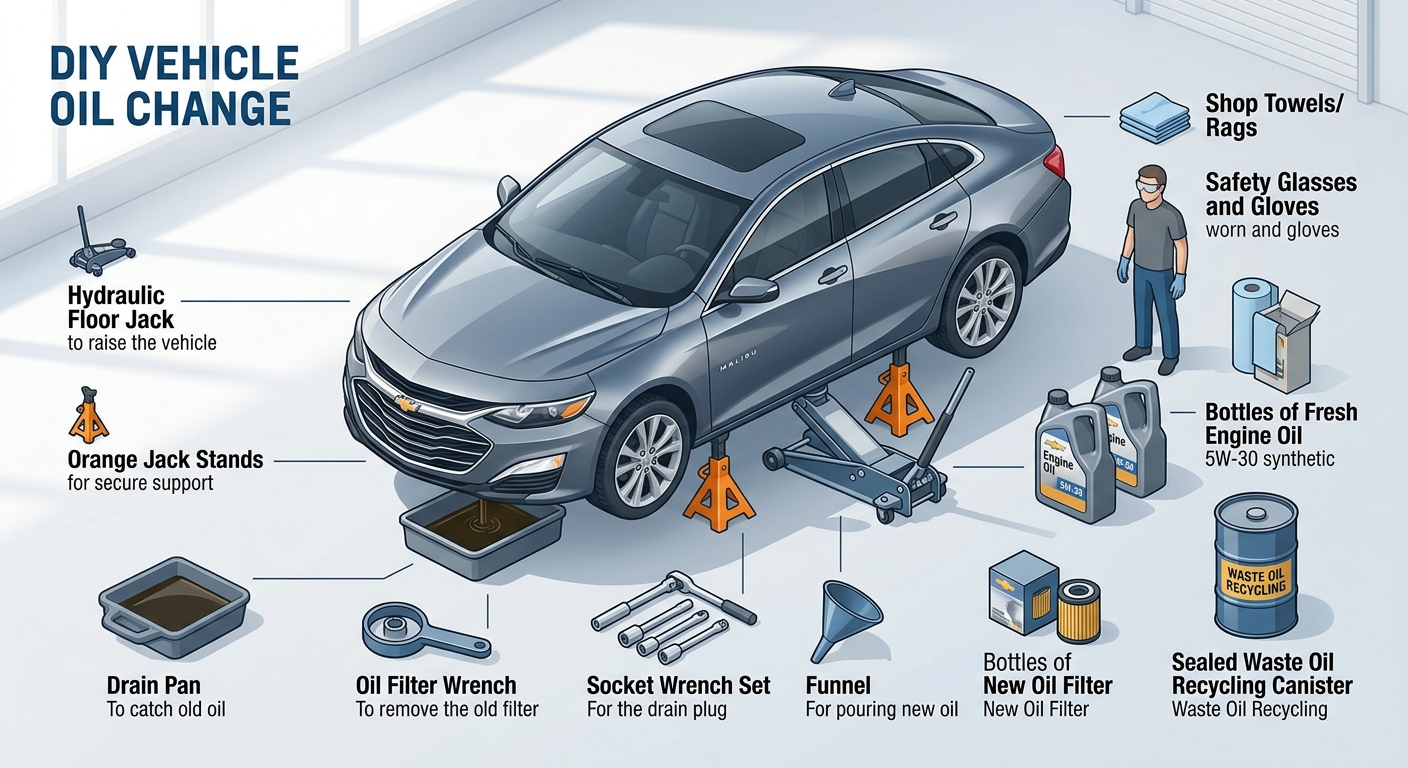
You can change your own oil if you have a floor jack, jack stands, an oil filter wrench, a drain pan, and an approved location to recycle used oil. Performing DIY oil changes requires purchasing the correct engine oil grade, replacing the oil filter gasket, and safely securing the vehicle, though professional dealer service ensures multi-point vehicle inspections and official warranty maintenance recording.
Changing motor oil in your driveway requires specific mechanical equipment and strict adherence to safety procedures. Beyond a basic socket set to remove the oil pan drain plug, you need a jack rated for your vehicle’s curb weight, safety stands to support the frame, an oil filter cap wrench, a funnel, and oil-absorbent pads. Slipping under a vehicle supported only by a hydraulic jack presents severe safety risks, so mechanical jack stands or drive-on ramps are non-negotiable prerequisites. You must also manage hazardous waste, as pouring used motor oil down storm drains or into household trash is illegal. Spent lubricant must be captured in a sealed drain container and transported to an authorized fluid recycling site.
Performing your own oil maintenance also requires precise attention to detail. Installing an oil filter requires cleaning the mounting mating surface and lightly lubricating the new rubber O-ring with fresh oil to prevent binding. Overtightening the drain plug can strip the aluminum threads on the engine oil pan, while undertightening it can lead to catastrophic oil loss on the highway. Additionally, modern vehicles utilize internal plastic splash shields under the engine bay secured by specialized push-pins or Torx fasteners that must be carefully removed and reinstalled without damage.
While servicing your vehicle at home saves on immediate labor costs, professional dealership service provides structural maintenance benefits that DIY care cannot match. Our factory-trained technicians inspect underlying mechanical systems—including brake pad thickness, suspension bushings, drive belts, and tire wear patterns—every time your vehicle enters the service bay. If you prefer expert care, you can visit our service center in Russellville or give our team a call at (270) 713-3840 to set up an appointment.
Table of Contents
- Why Is Regular Engine Oil Maintenance Necessary and How Does Internal Lubrication Work?
- In What Ways Does Engine Oil Help Cool Your Motor Under Heavy Loads?
- What Role Does Oil and the Oil Filter Play in Cleaning Engine Debris?
- How Do Oil Additives, Viscosity, and Corrosion Inhibitors Protect Engine Components?
- When Should You Schedule Oil Maintenance for Highway Commutes and Towing Around Elkton?
- Frequently Asked Questions About Chevrolet Oil Service and Engine Care
- Protect Your Engine Health with Certified Service at Newton Chevrolet
Why Is Regular Engine Oil Maintenance Necessary and How Does Internal Lubrication Work?
Regular engine oil maintenance is necessary because fresh oil forms a continuous fluid barrier between high-speed internal components, preventing direct metal-on-metal friction and rapid mechanical wear. Without periodic changes, oil oxidizes, breaks down under thermal stress, and fails to maintain the hydrodynamic film required to protect engine bearings, pistons, and camshafts.
Engine oil serves as the central operational lubricant inside an internal combustion engine. When the engine runs, an oil pump draws lubricant from the oil pan sump and forces it through internal galleries under pressure. This pressurized fluid travels directly to the crankshaft journal bearings, connecting rod journals, camshaft lobes, and hydraulic valve lifters. At these contact points, metal parts spin and oscillate thousands of times per minute. The motor oil forms a microscopic film mere microns thick that prevents steel and aluminum components from physically contacting each other.
Over thousands of miles, mechanical shearing forces and extreme internal heat degrade this oil film. Thermal oxidation causes oil molecules to break apart, reducing the fluid’s ability to maintain its protective thickness under heavy loads. As oxidation progresses, the oil loses viscosity and forms sticky carbon varnish across cylinder walls and piston rings. Once lubrication breaks down, bare metal surfaces grind against one another, generating metal shavings and accelerating clearance wear inside vital engine assemblies.
Daily stop-and-go driving across urban corridors in Clarksville creates elevated shear stress on motor oil due to frequent engine idling and speed variations. Prolonged idling keeps engine oil at sustained operating temperatures without the benefit of high-speed cooling airflow across the oil pan. This steady heat speeds up chemical degradation. Keeping up with regular maintenance protects vital drivetrain components, which is particularly valuable if you are maintaining a vehicle from our selection of pre-owned vehicles priced under $30,000 to maximize its operational lifespan.
In What Ways Does Engine Oil Help Cool Your Motor Under Heavy Loads?
Engine oil acts as a secondary coolant by absorbing extreme heat directly from internal components that liquid coolant cannot reach, such as pistons, wrist pins, and crankshaft bearings. It carries this heat away from combustion zones down to the oil pan, where airflow across the sump dissipates thermal energy into the atmosphere.
While your vehicle’s radiator and water pump circulate ethylene glycol coolant through passages in the engine block and cylinder heads, liquid coolant only cools the outer metal casting walls. The internal moving parts—specifically the undersides of the pistons, combustion chamber walls, and connecting rod bearings—reach temperatures exceeding 400 degrees Fahrenheit during heavy operation. Motor oil is continuously sprayed or splashed onto these high-heat zones. As the oil coats these glowing components, it absorbs thermal energy directly from the metal and drains back down into the oil pan.
When engine oil degrades, its thermal conductivity drops significantly. Aged, oxidized oil cannot transfer heat efficiently, leading to localized hot spots inside the engine block. These hot spots can cause thermal expansion of internal components beyond design tolerances, increasing the risk of scuffed cylinder walls, warped valve heads, or blown head gaskets.
Towing heavy trailers or hauling dense cargo subjects the powertrain to sustained heavy engine loads, dramatically increasing internal temperatures. Under these conditions, maintaining fresh lubricant is vital to prevent thermal breakdown. Driver safety and mechanical reliability remain paramount when carrying heavy payloads, which is why drivers seeking long-term dependability often explore our Newton Certified pre-owned inventory of thoroughly inspected vehicles.
What Role Does Oil and the Oil Filter Play in Cleaning Engine Debris?
Engine oil suspends soot, microscopic metal shavings, and combustion byproducts in detergent additives so they can be carried directly into the oil filter element. The oil filter traps these abrasive contaminants inside its synthetic or cellulose media, preventing dirty particles from recirculating through tight engine tolerances.
Combustion generates several chemical and physical byproducts, including unburned hydrocarbons, carbon soot, moisture, and trace acids. These contaminants blow past the piston rings into the engine crankcase during normal operation. Modern motor oils are formulated with chemical detergents and dispersants designed to wrap around these microscopic particles. By keeping soot and debris floating harmlessly in suspension, the oil prevents contaminants from settling onto internal surfaces and forming dense engine sludge.
As dirty oil flows through the engine lubrication gallery, it passes directly through the oil filter housing. The fluid enters the outer perimeter holes of the filter, pushes through pleated filtering media, and exits through the center tube back into the engine block. The filter element traps suspended carbon debris, microscopic dust particles, and wear metals down to sizes measured in microns.
| Oil Filter Condition | Oil Circulation Status | Engine Wear Risk Level | Internal Mechanics Behavior |
|---|---|---|---|
| Clean / New Filter | Full flow through primary media | Very Low | Particles captured down to 20 microns; optimal fluid pressure maintained |
| Partially Clogged | Restricted flow through media | Low to Medium | Filter pressure differential rises; minor restriction in top-end oil delivery |
| Fully Saturated / Bypass | Bypass valve forced open | High to Severe | Unfiltered oil recirculates continuously; debris scours bearings and cam lobes |
If an oil change is neglected for too long, the filter media becomes completely saturated with trapped debris. To prevent total oil starvation, oil filter housings feature a spring-loaded relief valve that opens when internal pressure rises too high. When this bypass valve opens, dirty, unfiltered oil pumps directly into the engine bearings. While this prevents total mechanical seizure from lack of oil, it allows abrasive debris to circulate freely through sensitive passages. Keeping your vehicle properly maintained preserves its mechanical integrity and protects its resale value when valuing your trade-in online for a future upgrade.
How Do Oil Additives, Viscosity, and Corrosion Inhibitors Protect Engine Components?
Modern engine oil relies on precise viscosity ratings and advanced chemical additive packages—including anti-wear agents, detergent dispersants, and anti-corrosion inhibitors—to maintain structural film strength under extreme pressure while neutralizing damaging acidic combustion byproducts.
Engine oil viscosity represents a fluid’s resistance to flow at specific temperatures. Modern Chevrolet engines typically utilize multi-grade full synthetic oils designated by ratings like 0W-20 or 5W-30. The number preceding the “W” (Winter) indicates how easily the oil flows at low morning temperatures, ensuring immediate pressure buildup during a cold start. The second number indicates the fluid’s viscosity at standard operating temperature (212 degrees Fahrenheit). Using the exact viscosity specified in your owner’s manual ensures proper operation of hydraulic components, including variable valve timing actuators and engine oil pumps.
Modern GM engines equipped with Active Fuel Management or Dynamic Fuel Management rely on precise hydraulic oil pressure to engage and disengage cylinder deactivation lifters. Using non-approved oil weights or failing to change depleted fluid can clog the microscopic solenoids controlling these systems, causing misfires and engine codes. GM specifies dexos1 full synthetic engine oil for modern gasoline vehicles because its chemical makeup resists viscosity loss and volatility breakdown under high stress.
Base Synthetic Oil + Additive Package
- Detergents & Dispersants (Neutralize acids, suspend soot)
- Anti-Wear Agents (Zinc/Phosphorus barrier protection)
- Viscosity Index Improvers (Stabilize film across temps)
- Corrosion Inhibitors (Shield bare metal from moisture)
Beyond viscosity, up to 25 percent of a bottle of motor oil consists of chemical additives:
- Anti-wear agents: Compounds like zinc dialkyldithiophosphate (ZDDP) create a sacrificial micro-layer on high-load components like camshaft lobes.
- Corrosion inhibitors: Chemical buffers neutralize sulfuric and nitric acids formed during fuel combustion, shielding iron and aluminum surfaces from rust.
- Viscosity index improvers: Polymers expand as the oil heats up, keeping the fluid from thinning excessively under summer heat.
When performing home maintenance or sourcing original components, drivers can order genuine fluids and filters directly through our factory parts department. If you are planning an upgrade to a newer vehicle with complete factory warranty coverage, you can explore payment arrangements by applying for financing online today.
When Should You Schedule Oil Maintenance for Highway Commutes and Towing Around Elkton?
Engine oil service should be scheduled according to the GM Oil Life Monitoring System, which alerts drivers at 15% remaining life or roughly every 7,500 to 10,000 miles under normal driving, while severe conditions like heavy towing mandate shorter 3,000 to 5,000-mile intervals.
The GM Oil Life Monitoring System (OLM) does not physically check the oil level; instead, it uses an advanced computer algorithm to monitor real-time vehicle telemetry. The system tracks engine revolutions, ambient operating temperatures, trip lengths, total idling time, and engine load factors. If you drive long highway miles at steady speeds, the system adjusts to reflect low wear, extending your service window toward the 10,000-mile mark. Conversely, frequent short trips in cold weather or extended engine idling cause the indicator to count down rapidly.
GM Oil Life Monitor Status
- 100% – 16%: Normal Operation (Monitor dipstick level monthly)
- 15% Remaining: Service Due Soon (Schedule maintenance appointment)
- 0% Remaining: Service Required Immediately (Risk of engine damage)
Agricultural hauling, farm equipment towing, and traversing unpaved secondary roads around Elkton place unique demands on motor oil. Heavy engine loads combined with airborne dirt and gravel dust meet the factory definition of severe operating conditions. When operating under these demanding conditions:
- Change engine oil and filter every 3,000 to 5,000 miles or 6 months.
- Check the manual dipstick every two weeks to ensure correct fluid volume.
- Inspect air filter elements frequently to keep fine farm dust out of the intake tract.
Relying solely on the digital oil life screen without pulling the dipstick can lead to severe issues. An engine can run critically low on fluid due to normal consumption while the digital monitor still shows remaining oil life percentage. Checking the dipstick manually ensures your engine retains sufficient oil volume between scheduled service visits.
Frequently Asked Questions About Chevrolet Oil Service and Engine Care
Q: Does the GM Oil Life Monitoring System actually measure the physical oil level in the engine?
No, the GM Oil Life Monitoring System does not measure fluid volume or physical oil levels in the oil pan. The system calculates remaining oil life using an onboard algorithm that tracks engine revolutions, operating temperatures, idle time, and driving conditions. Because it cannot detect low fluid levels caused by oil consumption or leaks, drivers must manually pull and read the mechanical dipstick at least once a month to verify correct oil volume.
Q: What happens if I drive my Chevrolet past 0% on the Oil Life Indicator?
Driving past 0% remaining oil life exposes your internal engine components to accelerated wear, elevated heat, and potential sludge buildup. At 0%, the oil’s chemical additives are depleted, meaning anti-wear agents and corrosion inhibitors can no longer protect internal metal surfaces. Continuing to drive with degraded fluid increases friction, risks clogging narrow oil passages, and may jeopardize your manufacturer warranty coverage if mechanical failure occurs. You can protect your powertrain by scheduling a service appointment online as soon as the maintenance light appears.
Q: Why does Chevrolet specify dexos1 full synthetic engine oil for modern gasoline engines?
Chevrolet specifies dexos1 full synthetic engine oil because it is engineered to meet strict GM performance benchmarks for thermal stability, oxidation resistance, and low-speed pre-ignition prevention. Modern turbocharged engines and advanced valve trains demand high film strength under extreme heat that conventional oils cannot provide. Using dexos-approved synthetic oil ensures proper hydraulic pressure for variable valve timing while protecting internal components from carbon deposit accumulation.
Q: Can I just top off my motor oil instead of doing a full oil and filter change?
Topping off low engine oil restores proper fluid volume, but it does not replace a complete oil service. Adding fresh fluid to an overdue engine mixes clean oil with dirt, soot, metal particles, and depleted additives already trapped in the crankcase. A complete oil change drains accumulated contaminants and replaces the saturated oil filter, ensuring clean fluid circulation throughout the engine block.
Q: How does short-distance driving affect how often I need an oil change?
Frequent short trips under five miles prevent the engine and motor oil from reaching full operating temperature. When an engine operates cold, water vapor and unburned fuel condense inside the crankcase rather than evaporating through the crankcase ventilation system. This moisture combines with combustion gases to form harmful acids and sludge, requiring more frequent oil changes under severe-use maintenance guidelines. Proper maintenance records are essential when maintaining long-term vehicle value, especially for vehicles enrolled in the Newton Certified Pre-Owned program. Drivers can also streamline their vehicle purchases using the Newton Fastpass platform for a clear, modern buying process.
Protect Your Engine Health with Certified Service at Newton Chevrolet
Consistent oil maintenance remains the single most effective action you can take to preserve engine performance, prevent mechanical wear, and safeguard your vehicle’s long-term value. From maintaining internal film strength to cleaning out combustion byproducts and cooling critical bearings, fresh motor oil keeps your powertrain operating at peak efficiency.
Delaying engine service risks expensive internal damage, reduced fuel economy, and premature component failure. Whether your vehicle is due for a routine oil change based on time or your GM Oil Life Monitoring System has reached its service threshold, our team provides comprehensive automotive care. Our factory-trained technicians use approved oils, genuine filters, and specialized diagnostic equipment to keep your vehicle running smoothly.
Take the proactive step in preserving your vehicle’s health today. Visit our location on Hopkinsville Road, call us directly at (270) 713-3840 to set up your next maintenance appointment, or browse our new Chevrolet inventory online to explore our latest vehicle lineup.
0 comment(s) so far on Can I Change My Own Oil?