
The Science of Engine Lubrication and Hydraulic Protection
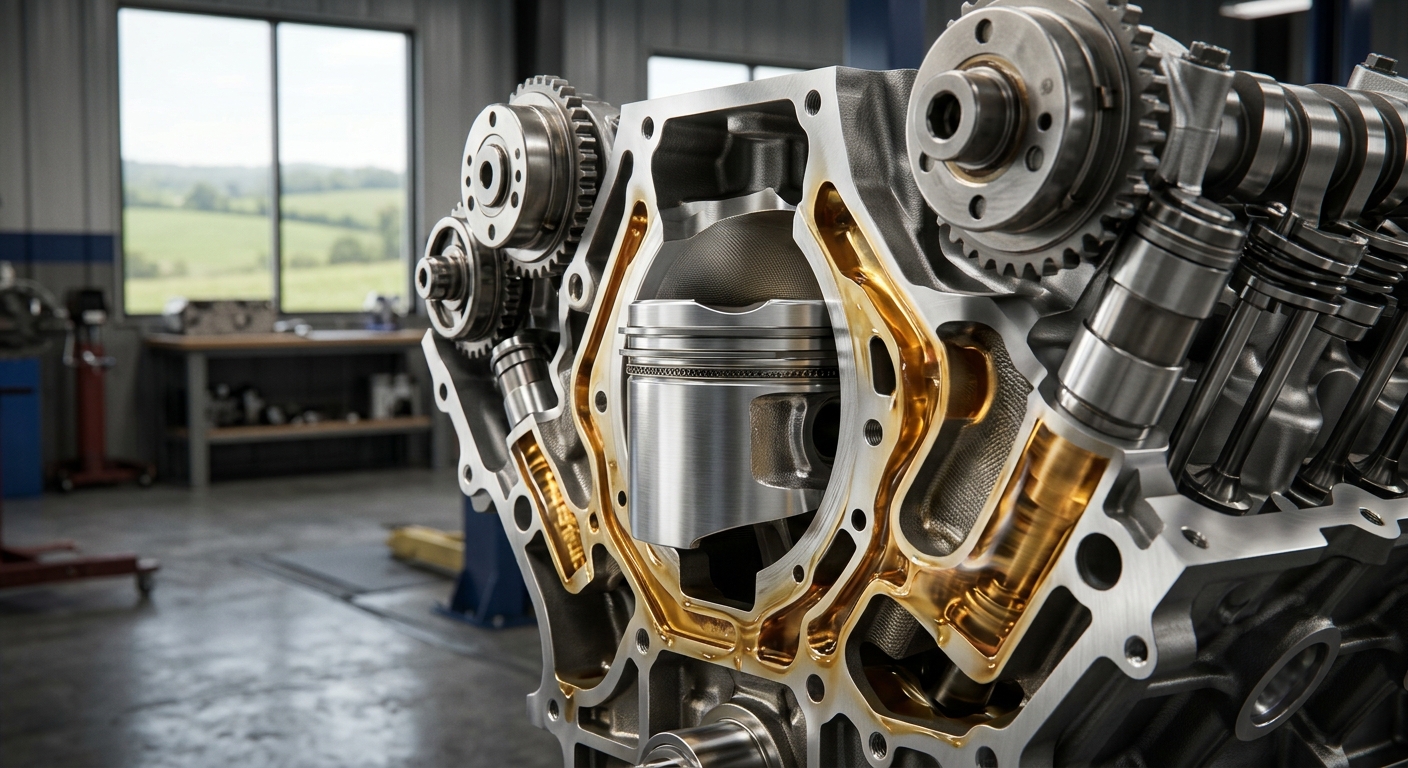
Internal combustion engines rely on a precisely engineered fluid barrier to prevent catastrophic metal-on-metal contact. At its core, engine oil provides internal lubrication by creating a microscopic film between moving components, such as the contact point where a piston ring meets a cylinder wall. Without this layer, the friction generated by thousands of revolutions per minute would weld metal parts together almost instantly. This process, known as hydrodynamic lubrication, ensures that heavy engine loads are supported by the fluid itself rather than the physical surfaces of the engine internals.
Beyond simple friction reduction, modern lubricants serve as a critical hydraulic fluid. Many 2026 Chevrolet models utilize oil pressure to manage variable valve timing and active fuel management systems. In these engines, the oil acts as a messenger, transmitting the force required to adjust camshaft positions or deactivate cylinders for better efficiency. If the oil is too thick from age or too thin from fuel dilution, these hydraulic systems cannot function with the precision required by the engine control module.
Ensuring this fluid remains in peak condition is the primary goal of our service team at 452 Hopkinsville Rd, Russellville, KY 42276. For drivers in Central City, the combination of rural highway speeds and agricultural hauling puts specific stresses on these internal barriers. Maintaining the integrity of the oil film is what allows a high-torque engine to survive years of heavy use. If you have questions about the specific lubrication needs of your vehicle, you can reach our technicians for a quick call to discuss the best maintenance path. For those ready to visit us in person, our service center location is easily accessible for a professional inspection.
Table of Contents
- How Motor Oil Minimizes Friction and Dissipates Extreme Heat
- The Active Cleaning and Debris-Trapping Role of Modern Lubricants
- Synthetic versus Conventional Oil and Why Molecular Structure Matters
- Recognizing the Warning Signs of Oil Degradation and Contamination
- Understanding the Chevrolet Oil Life Monitor and Scheduled Maintenance
- Common Questions About Lubrication and Oil Maintenance
How Motor Oil Minimizes Friction and Dissipates Extreme Heat
While the radiator and coolant handle the upper portion of the engine, the oil is responsible for cooling the “basement” of the power plant. As oil circulates through the engine, it absorbs thermal energy from the crankshaft, bearings, and the underside of the pistons—areas where liquid coolant cannot reach. This heat is then carried back to the oil pan, where it is dissipated by airflow. In high-performance or heavy-duty applications, an external oil cooler may be used to further manage these temperatures, ensuring the lubricant does not reach its flash point or begin to oxidize prematurely.
Friction is the enemy of both longevity and fuel economy. When metal surfaces rub together, they generate heat and shed microscopic particles. The additives in modern motor oil, such as friction modifiers, are designed to bond to metal surfaces, providing an extra layer of protection even when the engine is turned off. This is particularly important during a “cold start,” which is when the highest percentage of engine wear occurs because the oil hasn’t yet reached full operating pressure.
When we walk families through the capabilities of our new Chevrolet Tahoe inventory, we often discuss how much heat is generated when towing a trailer through the rolling terrain near Glasgow. The high-load environment of the Pennyroyal Plateau requires an oil that won’t thin out under the duress of a long climb. To keep your vehicle running at the correct temperature and efficiency, you can schedule a service appointment to ensure your lubricant is fresh and capable of handling the heat. This is especially vital for those who have recently transitioned into a larger vehicle from our current Chevrolet Suburban inventory, where the cooling demands of a 5.3L or 6.2L V8 engine are significant during summer months.
The Active Cleaning and Debris-Trapping Role of Modern Lubricants
Modern engine oil is formulated with a sophisticated package of detergents and dispersants that act as a cleaning crew for the engine’s internal galleries. As the fuel burns, it creates byproducts like soot, carbon, and acid. The detergents in the oil work to scrub these deposits off metal surfaces, while the dispersants keep the particles suspended in the fluid so they don’t clump together to form sludge. This suspension ensures that contaminants are carried directly to the oil filter, where they are trapped and removed from circulation.
If these contaminants were allowed to settle, they would eventually clog the narrow oil passages that feed the overhead cams and turbocharger bearings. This is a primary concern for owners of turbocharged vehicles, such as those found in our new Chevrolet Trailblazer inventory. The high-speed bearings in a turbocharger require a constant flow of clean, debris-free oil to prevent overheating and seized components. Regular maintenance ensures that the “scrubbing” ability of the oil is never depleted, keeping the internal environment as clean as the day it left the factory.
For those browsing our selection of used SUVs, checking the maintenance history for regular oil changes is one of the best indicators of long-term health. A clean engine interior translates to better compression and more consistent power delivery over the life of the vehicle. This is true whether you are driving a compact crossover or one of the larger options in our new Chevrolet Traverse inventory. Without the active cleaning provided by fresh oil, the accumulation of varnish and carbon can lead to stuck piston rings and expensive repairs.
Synthetic versus Conventional Oil and Why Molecular Structure Matters
The choice between synthetic and conventional oil comes down to how the molecules are constructed. Conventional oil is refined from crude oil, meaning its molecules vary in size and shape, which can lead to uneven lubrication and faster breakdown under high heat. In contrast, synthetic oil is chemically engineered to have uniform molecular structures. This uniformity allows the oil to flow more easily at low temperatures—crucial for winter mornings in Kentucky—and provides a more stable film at high temperatures.
Synthetic lubricants also feature superior oxidative stability. When oil is exposed to oxygen and heat, it begins to thicken, eventually turning into a tar-like substance if left too long. Synthetic blends and full synthetics resist this process far better than conventional options, allowing for the extended service intervals found in most 2026 Chevrolet models. This stability is why we recommend synthetic options for the high-efficiency engines in our new Chevrolet Trax inventory, where maintaining low viscosity is key to achieving maximum fuel economy.
- Full Synthetic Oil: Offers the highest level of protection against heat and deposits; ideal for towing and turbochargers.
- Synthetic Blend: A mix of synthetic and conventional bases that provides better protection than standard oil at a lower price point than full synthetic.
- Conventional Oil: Suitable for older engines with simpler designs, though rarely recommended for the latest model years.
- High-Mileage Oil: Contains special seal conditioners to help reduce oil consumption and leaks in engines with over 75,000 miles.
Whether you are looking at our latest new vehicles or exploring the value in our used vehicle inventory, understanding the oil requirement is vital. Most modern Chevrolet engines are factory-filled with dexos1™ Gen 3 full synthetic oil to meet the rigorous demands of modern emissions and performance standards.
Recognizing the Warning Signs of Oil Degradation and Contamination
While the dashboard will often tell you when it is time for a change, being able to spot the physical signs of oil failure can save you from an unexpected breakdown. Fresh oil typically has a translucent, amber hue. As it works, it naturally darkens to a deep brown or black as it traps carbon and soot. However, if the oil becomes thick, gritty, or smells like burnt toast, it has moved past its useful life and is no longer providing the hydrodynamic barrier your engine needs.
Another critical sign to watch for is a milky or “chocolate milk” appearance on the dipstick. This usually indicates that coolant has leaked into the oil system, often due to a failing head gasket or oil cooler. This contamination destroys the oil’s ability to lubricate and can cause rapid engine failure. Similarly, if the oil smells strongly of raw gasoline, it may be a sign of fuel dilution, which thins the oil and reduces its protective film strength. This is a scenario we occasionally see with heavy-duty work trucks, such as those in our new Chevrolet Silverado 2500 inventory, when they are used for frequent short idling sessions in cold weather.
For shoppers looking at our used vehicles under 30K, we always suggest pulling the dipstick as part of the inspection process. It provides a quick window into how well the previous owner cared for the machine. Even on advanced electric models like those in our new Chevrolet Blazer EV inventory, while they don’t require traditional engine oil changes, they still utilize specialized fluids for gear reduction units and cooling systems that require periodic checks.
Understanding the Chevrolet Oil Life Monitor and Scheduled Maintenance
Chevrolet uses a sophisticated Oil Life Monitor (OLM) system that moves away from the old-fashioned “3,000-mile” rule. Instead of just counting miles, the OLM tracks engine temperature, RPM, and driving habits to calculate the actual rate of oil degradation. For example, a driver in Barren Plains who spends most of their time on the highway will likely see their oil life last much longer than someone who uses their truck for heavy towing or short, stop-and-go trips in the city. The system will display a “Change Engine Oil Soon” message when the calculated life reaches a certain threshold, typically giving you enough time to schedule service before it hits 0%.
Under normal driving conditions, many 2026 Chevrolet models have a service interval of roughly 7,500 miles. However, the factory guidance clearly states that “severe service” requires more frequent changes. Severe service includes:
- Frequent short trips (less than 5 to 10 miles).
- Extensive idling or stop-and-go traffic.
- Driving in dusty or off-road conditions.
- Heavy towing or hauling.
When you browse our current used truck inventory, you’ll find that many of these vehicles have been maintained according to these precise OLM prompts. For those interested in the latest technology, our new Chevrolet Blazer inventory features the most current version of this monitoring system, ensuring you never change your oil too early or too late. Even for the heavy-duty demands of our new Chevrolet Silverado HD inventory, the OLM takes the guesswork out of maintenance by adjusting the countdown based on the load the engine is carrying.
Common Questions About Lubrication and Oil Maintenance
Q: How does engine oil provide internal lubrication if the engine is cold?
Engine oil is designed with viscosity improvers that allow it to remain fluid even in freezing temperatures. When you first turn the key, the oil pump immediately sends this fluid through the engine block. While the oil is thicker when cold, modern synthetic blends are engineered to reach critical bearings within seconds, preventing the metal-on-metal grinding that would otherwise occur before the engine reaches operating temperature.
Q: Why does my oil look black only a few weeks after a change?
Dark oil is actually a sign that the fluid is doing its job. The detergents in the oil are designed to capture soot and carbon byproducts from the combustion process. Especially in diesel engines or direct-injection gasoline engines, the oil will darken quickly as it cleans the internal surfaces. As long as the texture remains smooth and the Oil Life Monitor is in the healthy range, the color change is a normal part of the cleaning process.
Q: Can I switch from conventional oil to synthetic oil on an older vehicle?
Yes, you can typically switch to synthetic oil at any time. Modern synthetic oils are fully compatible with conventional oils and will not harm the seals of an older engine. In fact, the superior cleaning properties of synthetic oil can help remove old sludge deposits. If you are considering a vehicle from our certified pre-owned program, it has likely already been serviced with the high-quality synthetic fluids recommended by the manufacturer.
Q: Does “Severe Service” really apply to my daily commute?
It often does. If your daily drive involves stop-and-go traffic or trips where the engine doesn’t reach full operating temperature for at least 15 minutes, your vehicle is operating under severe conditions. This causes moisture to accumulate in the oil, which can lead to acid buildup. Our team can help you determine the best interval for your specific routine when you learn more about our service philosophy and how we support local drivers.
Q: How long does a professional oil change take at the dealership?
A standard oil and filter change, which includes a multi-point inspection, typically takes about 45 to 60 minutes. We use this time to check your tire pressure, fluid levels, and brake wear to ensure your vehicle is safe for the road. For those who want to streamline the process, you can use our Fastpass tools to coordinate your visit and stay informed about your vehicle’s status in real-time.
For every driver from the agricultural fields of the region to the urban streets of the neighboring cities, maintaining engine health starts with the right lubricant. If you are ready for your next service or want to explore a new vehicle, you can find our showroom and service center on Hopkinsville Rd. Our technicians are standing by to ensure your engine remains protected, and you can always give us a quick call to verify which oil is best for your specific Chevrolet model.
0 comment(s) so far on The Science of Engine Lubrication and Hydraulic Protection