

Credit Score Blueprint for Lower Auto Payments in Russellville, KY
Credit Score Blueprint for Lower Auto Payments in Russellville, KY
You don’t need sunshine for lower payments on a car. You need a plan that doesn’t wobble every time your score twitches.
Around Russellville, Hopkinsville, Adairville, and Bowling Green, folks talk about weather like it decides everything.
Credit doesn’t work like that.
You move it. On purpose.
Picture a barn frame out on US-68. You brace the posts, pull the line tight, and every inch matters. Same with a credit file.
Nudge the right braces and lenders stop flinching. Card offers change. Auto loan rates near Logan County get friendlier.
Nothing mystical happens—just numbers, reported on specific days, read by software that prices risk.
The five beams lenders actually measure
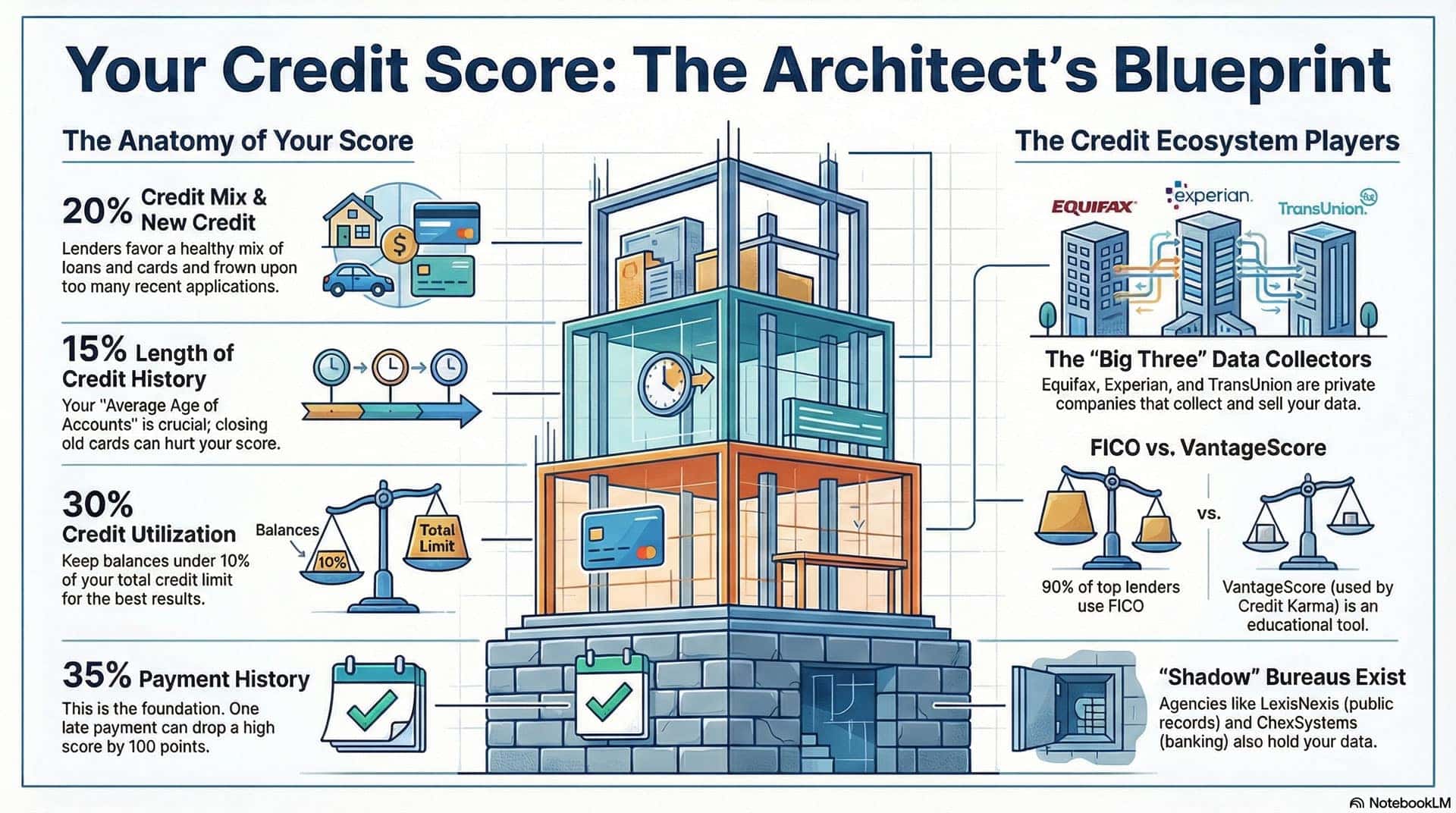
FICO does most of the judging in auto financing. It looks at five buckets: payment history (35%), utilization/amounts owed (30%),
length of credit (15%), new credit (10%), and credit mix (10%). If you only have energy for two beams this month, attack the first two.
They move fastest.
Payment history — 35%. Miss a 30-day payment and the model throws a flag. Not forever, but hard enough to feel it.
Think of this as the concrete slab under the barn. Set Auto-Pay for at least the minimum on every card. Pay extra before the statement prints.
That’s your crack-prevention plan.
Utilization — 30%. This is where you grab quick points before you walk into our finance office off Nashville Street.
Utilization is reported balance divided by credit limit. Under 30% works. Under 10% looks calm. The key: bureaus read the
statement balance, not what you send five days later. So schedule a payment two or three days before each statement date.
You still earn rewards; you just report leaner.
Length of credit — 15%. Old, boring lines do heavy lifting. Don’t close your first card unless a fee forces your hand.
Every new account lowers the average age, so add sparingly.
New credit — 10%. A cluster of inquiries tells the wrong story. Rate-shop your auto loan within a short window so it counts as one event;
otherwise, space applications.
Mix — 10%. Cards plus an installment loan (auto, student, mortgage) show you can handle different tools.
Don’t open debt you don’t need just to chase this slice.
Who holds your file vs. who scores it
Equifax, Experian, and TransUnion collect. FICO scores. Your bank app might show VantageScore, which trends fine,
but most underwriters still pull FICO for auto. Different math, different number. Expect a gap.
The two-day Russellville rebuild
Give yourself 48 tight hours—say a quiet Friday night after a Panthers game and a Saturday morning before you hop on KY-79—and put the bones in place.
1) Build a master folder. Call it Credit_Master. Add subfolders for IDs, reports, disputes, and notes.
Store: a photo ID, your Social Security card, and a proof of address (utility bill or bank statement). Scan to PDF and label cleanly:
ID_AH_2026-01-06.pdf and so on.
2) Pull real reports. Use AnnualCreditReport.com and download all three—Equifax, Experian, TransUnion.
Save with dates. If the website throws weird security questions you can’t answer, use the mail or phone option. Slow beats wrong.
3) Pre-audit without arguing.
- Names and addresses: clean or not? Old Logan County addresses hanging on?
- Open accounts: are balances and limits accurate? Any card missing a limit, which makes utilization look worse?
- Negatives: any late payments you don’t recognize, or medical collections that should be coded correctly?
- Inquiries: every pull familiar? Unknown ones signal fraud.
Make a checklist by bureau. No disputes yet—just spotting loose nails.
4) Pull the lever that moves this week: utilization.
- Pay down before the statement date. Set calendar alerts for each card’s cut date.
- Ask for responsible credit line increases on cards with clean history. Same balances, lower percentages.
Skip if the bank warns it’s a hard pull you can’t afford right now. - Shift heavy spend to debit for a month if your reporting balances keep creeping above 30%.
Don’t torch your oldest card
Keep the age on life support with a tiny, recurring charge (cloud backup, streaming). Auto-Pay the bill.
If an annual fee bites and the issuer won’t downgrade, weigh the hit to age and utilization before closing.
If a card tempts you to overspend, sock-drawer the plastic and keep the account open.
Secondary files locals forget about
Past the Big Three, there’s a set of specialty bureaus lenders check around Russellville and beyond:
- LexisNexis and SageStream: identity cross-checks and public records.
You can request files and place freezes through the LexisNexis consumer center. - ChexSystems: banking behavior—bounced checks, unpaid fees. A rough file here can block a simple checking account.
- Innovis: the “fourth bureau” with freezes you control online.
If you’re in dispute mode, freezes add friction. You decide when to thaw for an application. Data doesn’t vanish; it just stops getting pulled without your say-so.
What “clean” looks like in Logan County
One legal name, current Russellville address, and two or three past addresses you recognize.
Open accounts with the right limits, right balances, and the right status. Utilization under 10% on every reporting card.
No mystery inquiries in the last year. No late payments in the last two. Specialty bureaus frozen unless you’re actively applying.
When a lender pulls that file, the picture reads calm. Boring, even. Boring leads to better car notes.
Straight answers, no fluff
Is the score in my bank app legit? Useful for trend-spotting. Just expect the auto desk to quote FICO, not the number you saw on your phone.
Is 30% utilization “fine”? It’s not a cliff. Under 30% won’t sink you. Under 10% usually looks better. Under 3% on a paper-thin file can read oddly.
How fast can I move a score before I shop for a car in Bowling Green? Utilization changes the moment the next statements report lower balances. Payment history and age take time. Different gears, different speeds.
Do I need more accounts? Not if you already have enough capacity. Fewer, older, cleaner lines win.
0 comment(s) so far on Credit Score Blueprint for Lower Auto Payments in Russellville, KY